Key Takeaways
- The latest AEO trends strategies insights show that zero-click searches and AI Overviews dominate, making AEO essential for visibility in 2025.
- Effective answer engine optimization AEO strategies 2025 include tailoring content to search intent, optimizing for voice queries, and structuring data for AI-driven platforms.
- Success comes from blending traditional SEO with answer engine optimization AEO keyword selection strategies 2025, ensuring your brand is cited in AI overviews, featured snippets, and LLM-generated answers.
AI search rewards brands that stay fresh and authoritative.
With ROI Digitally’s AI SEO Optimization Service, your site gets monthly updates tuned to AI-preferred signals and enhanced E-E-A-T frameworks, keeping your brand both current and credible in Google AI Overviews and generative engines.
Explore our service now!
Latest AEO Insights: 2025 Update
As AI continues to reshape how people search, AEO (Answer Engine Optimization) is moving from a niche strategy to a core part of digital marketing. The latest data highlights just how quickly search behavior is shifting toward AI-driven answers and why businesses need to adapt.
Below are some of the most important AEO statistics and trends that show where things are headed:
Key Statistics and Trends in AEO
- Zero-click searches are on the rise: More than 65% of Google searches now end without anyone clicking a link. People are getting answers directly on the results page, which makes AEO crucial for visibility.
- AI traffic is growing fast: By 2026, a quarter of all organic search traffic is expected to come from AI chatbots. This means more users will discover content through AI assistants rather than traditional search.
- Businesses are adopting AEO strategies: As of 2025, about 31.5% of companies already have a plan in place, with many more actively building one. It’s quickly becoming a standard part of digital marketing.
- AI Overviews impact click-throughs: Google’s AI-generated answers can cut website clicks by about 50%. While traffic may drop, brands that appear in these answers gain authority and reach.

Visitors to ChatGPT have grown exponentially in the past years, along with other tools, showcasing the demand for using AI in today’s user behavior. Source: Graphite
Benefits for Businesses
- More visibility and authority: Even if users don’t click through, showing up as the featured answer boosts brand recognition and credibility.
- Direct exposure in AI Overviews: Getting cited in AI-generated responses ensures your content is still seen by a wide audience, even without the click.
- Higher conversions through structured content: For example, one SaaS company boosted sign-ups by 22% after turning a long guide into an FAQPage, making it easier for AI to surface answers.
- Voice search pays off: A pizza chain saw a 35% increase in voice-search menu queries and 20% more online orders by adding speakable FAQ blocks to their site.
Key AEO Elements Proven by Data
- Structured content drives results: Turning long guides into FAQs or concise answer pages makes it easier for AI and users to engage.
- Structured data enhances discovery: A home-services provider increased voice-triggered calls by 30% in one month by adding JSON-LD tags to local FAQs.
- Conversational answers matter: As AI chatbots and voice assistants grow, providing clear, direct responses is now a must for staying relevant in search.
Latest AEO Trends: 2025 Update
By 2025, Answer Engine Optimization (AEO) will have become a must-have for visibility across Google AI Overviews, Bing Copilot, ChatGPT Search, Perplexity, and even voice assistants. Instead of clicking links, users are asking questions and getting direct, AI-powered answers.
To stay ahead, businesses need to understand the latest AEO trends strategies insights shaping the AI-first search era.
1. AI and Conversational Search Integration
One of the biggest shifts in 2025 is how conversational search has become the new normal. Platforms like ChatGPT and Bing Copilot are designed to answer questions in natural language, not just return a list of results.
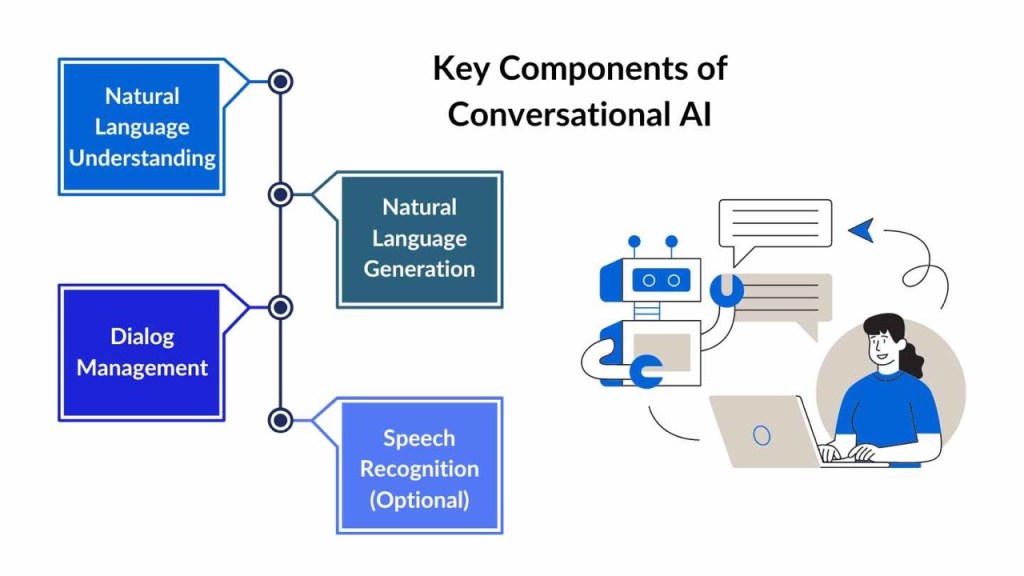
Conversational AI key components. Source: Spot Intelligence
For businesses, this means content has to mimic real conversations:
- Natural queries matter: Users are asking complete questions, not just typing short keywords. Optimizing for long-tail, question-based searches is crucial.
- Context is key: AI doesn’t just look at keywords—it interprets meaning. Content needs to explain topics thoroughly, covering follow-up questions and context.
Brands that adapt to this conversational style gain visibility in AI-driven answers and position themselves as trusted voices in this new landscape.
2. Content and User Experience Optimization
The latest trends in answer engine optimization highlight that clarity and trustworthiness are non-negotiable in 2025. AI systems prefer structured, authoritative content that they can easily parse.
- Schema markup: Adding structured data (FAQ, HowTo, Product schema) gives AI engines explicit signals about your content.
- Topic clusters: Instead of writing isolated articles, grouping content into clusters around a central theme builds authority and signals expertise.
- Direct answers: Concise explanations of 50–100 words satisfy AI engines and users by giving immediate clarity.
- E-E-A-T principles: Demonstrating expertise, authority, and trust—through authorship, reliable sources, and regular updates, has become vital for standing out.
In short, the winners in 2025 will be those who make their content scannable, structured, and trustworthy.
3. Technical and Strategic Foundations
Strong content isn’t enough. Instead, you also need the right technical setup to succeed with AEO in 2025.
- Voice-first and mobile-ready: With voice assistants growing and most searches happening on mobile, pages must load quickly and work seamlessly across devices.
- Support for snippets and summaries: Lists, FAQs, and tables make it easier for AI engines to generate summaries from your content.
- SEO + AEO together: Traditional SEO still brings in clicks, but AEO ensures your content is present in zero-click AI answers. Blending both is the new standard strategy.
Companies that align their technical foundations with AI behaviors will be better equipped to capture both organic traffic and AI-driven visibility.
4. Emerging Trends in AEO 2025
Beyond the basics, several new AEO trends in 2025 are reshaping how marketers think about AI optimization:
- Structured Q&A formats: Direct, question-and-answer content is favored by AI engines for quick citations.
- Topic clusters over keywords: Building topical authority is more effective than targeting single keywords.
- ROI tracking: CMOs demand measurable results from AEO campaigns, making ROI-focused strategies more important.
- LLM optimization: Large language models like ChatGPT and Gemini are becoming discovery engines, requiring new optimization tactics.
- Hyper-personalization: AI engines are delivering increasingly tailored answers, which means content should anticipate different user contexts.
- Continuous auditing: AI evolves weekly, so static reports are outdated. Real-time monitoring and updates are now essential.
These shifts mean marketers can’t treat AEO as a one-time setup. Instead, it’s an ongoing process that adapts as AI platforms evolve.
AEO Strategies To Follow in 2025
Search is changing fast. Instead of scrolling through endless links, users are asking questions directly to platforms like Google AI Overviews, Bing Copilot, ChatGPT, and Perplexity, and they’re getting instant answers. This is where Answer Engine Optimization (AEO) comes in.
To stay visible, businesses need to adapt their content so it’s clear, credible, and easy for AI-driven engines to feature. Below, we’ll explore the latest AEO trends strategies insights and break down five of the most effective approaches that define answer engine optimization AEO strategies 2025.
1. Tailor Content to User Search Intent
One of the most important answer engine optimization AEO strategies is making sure your content matches search intent. AI engines are designed to give users the best possible answer with minimal effort. If your content is unclear or doesn’t match what people are really looking for, it won’t get picked up.
To start, categorize your target queries into four main types:
- Informational: People want to learn something (“How to start a blog”). Best served by guides or blogs.
- Navigational: People want to find a brand or website (“Spotify login”). Needs a landing page.
- Commercial: People are comparing products (“best CRM tools for startups”). Works best with comparison content or listicles.
- Transactional: People are ready to buy (“buy Nike running shoes online”). Requires highly optimized product pages.
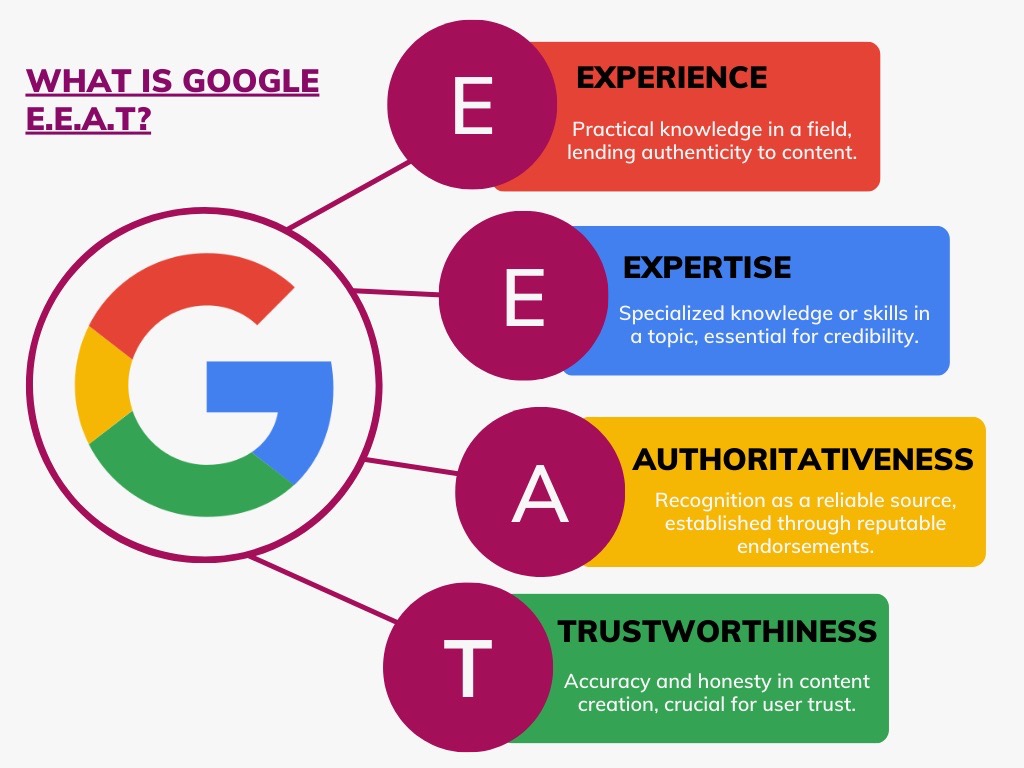
Beside the 4 types of content, you must also qualify the EEAT framework of Google to maximize your AEO foundation. Source: Advertising Agency
Another layer is answer engine optimization AEO keyword selection strategies 2025. Instead of only focusing on high-volume keywords, you should prioritize long-tail and question-based searches that AI engines love.
For instance, the “People Also Ask” section in Google is a goldmine of questions your audience wants answered. By matching your format to what’s already ranking (lists, tables, or short paragraphs), you boost your chances of being featured in AI summaries or snippets.
2. Optimize for Voice Search
Voice search has become a daily habit for millions of users. More than 20% of people worldwide use assistants like Alexa, Siri, or Google Assistant each week, and the trend is still growing.
Voice queries are different from typed searches, they’re longer, more conversational, and often local. That’s why optimizing for voice search is one of the smartest answer engine optimization AEO strategies 2025.
Here’s how to adapt:
- Use natural language: Write like people speak. Instead of “best dentist NYC,” optimize for “Who is the best dentist in New York City?”
- Be concise and clear: Voice assistants often read answers aloud, so keeping responses short (30–50 words) makes your content more likely to be chosen.
- Add structured data: Schema markup, particularly FAQ schema, helps search engines understand your content better. Even better, consider “speakable schema” (currently in beta), which is designed specifically for voice optimization.
- Prioritize local SEO: Roughly 22% of voice searches are location-based. Make sure your Google Business Profile is up to date, create local landing pages, and add customer reviews to strengthen credibility.
Real-world results show how powerful this can be. For example, a local pizza chain that added speakable FAQ blocks saw a 35% jump in voice-search menu queries and a 20% increase in online orders. That’s proof that voice-optimized content has an impact on driving real business outcomes.
3. Optimize for AI Overviews
AI Overviews are one of the most visible parts of the search landscape in 2025. They appear in about 50% of Google searches, pulling together snippets from multiple sources into one AI-generated summary.
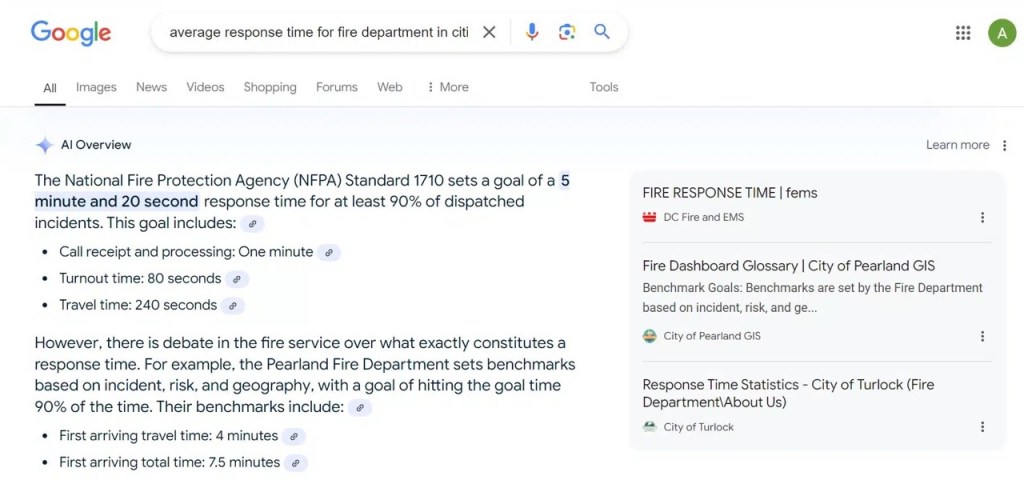
Example of AI Overview. Source: Search Engine Land
For brands, this is both a challenge and an opportunity. Even if clicks decline, appearing in an overview builds authority and keeps your content top-of-mind.
To make sure your content is included:
- Focus on expertise and quality: AI engines pull from credible sources. Having expert authors, citing reliable references, and updating content regularly increases your trustworthiness.
- Use structured data: Markup FAQs, products, and videos so Google can quickly interpret and organize your content.
- Include citations from authoritative sources: Referencing industry research, statistics, and credible studies not only strengthens your content but also signals to Google that you belong in the conversation.
- Track your mentions: Tools like Goodie AI let you see how often your brand appears in AI Overviews, helping you spot opportunities and fill gaps.
While AI Overviews can reduce website clicks by around 50%, they also expose your brand to a wider audience than traditional search ever could. This makes optimizing for them one of the most valuable latest AEO trends strategies insights to adopt right now.
4. Optimize for Featured Snippets
Featured snippets are the original form of “answer-first” search. They appear for about 12% of all queries, offering direct answers above the top organic result. In 2025, they’re still highly relevant—not only for visibility but also for managing your brand reputation.
Practical steps to win featured snippets include:
- Match the format: If the snippet is a list, write your answer as a list. If it’s a paragraph, keep it short (40–50 words).
- Target informational queries: These are the queries most likely to trigger snippets (“What is AEO?”).
- Use clear headers: Incorporate the exact query into H2 or H3 headings. Example: “How to Start a Business.”
- Add natural keywords: Weave keywords into answers naturally, without stuffing.
Snippets are especially useful for pushing down negative search results. If there’s unfavorable content ranking for your brand, securing the snippet with a positive and accurate answer lets you control the narrative. For businesses that want to build trust, snippets remain one of the most effective answer engine optimization AEO strategies 2025.
5. Optimize for Large Language Models (LLMs)
The most forward-looking strategy in 2025 is optimizing for LLMs like ChatGPT, Gemini, and Perplexity. These platforms don’t just extract snippets—they generate entire answers by blending multiple sources. Getting cited in these answers cements your brand as a trusted authority.
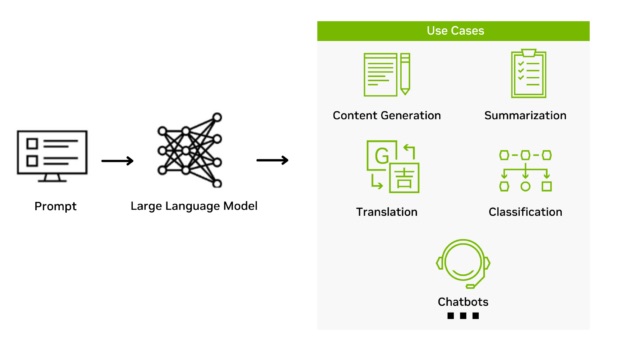
LLM explanation and use cases. Source: NVIDIA
Here’s how to optimize:
- Organize content logically: Use clear headings, bullet points, and summaries. AI models digest structured content better.
- Develop content clusters: Create pillar pages that cover broad topics, with internal links to supporting subtopics. This shows depth and expertise.
- Answer like an LLM: Start with a short, direct response before diving into detail. This mirrors how AI tools deliver answers.
- Provide unique value: Include original research, statistics, or expert commentary. LLMs are more likely to cite content that stands out.
- Leverage monitoring tools: Platforms like Goodie track how often your brand appears in AI-generated responses, giving you real-time insights into performance.
This is where the future of AEO is headed. As AI-driven platforms become discovery engines in their own right, optimizing for LLMs will be a core part of all answer engine optimization AEO strategies 2025.

Jeng Nguyen has nearly 10 years of experience ranging from project management, operations, business development, customer service, content creation, video production, photography, website development, social media marketing, email marketing, advertising, SEO and sales.
Well-known as an ace Digital Marketing expert throughout various industries in Vietnam, Australia and the USA - Jeng is known for the success rate that he achieves whilst finding solutions tailored best for each unique business.
Jeng's mission is to revolutionize customer experience, starting with the journey of Attraction - Interest - Desire – Action. Together with a multi-expertise team at ROI Digitally, Jeng aims to provide businesses unprecedented breakthroughs in Return-on Investment from their customers.