Key Takeaways
- Answer Engine Optimization (AEO) is the process of structuring and optimizing content so that AI-driven platforms like ChatGPT, Google AI Overviews, and voice assistants can directly pull and deliver concise, authoritative answers to user queries.
- Search Engine Optimization (SEO) is the long-standing practice of improving website visibility in traditional search engines like Google and Bing, using tactics such as keyword research, backlinks, metadata, and long-form content to drive organic traffic and conversions.
- How does AEO differ from traditional SEO? SEO focuses on ranking web pages to attract clicks and traffic, while AEO is about becoming the direct answer in AI-powered search environments. Yet, that isn’t it. Read the article to explore in detail!

If you want your brand to show up in the AI answers people actually rely on for quick, clear information, explore ROI Digitally’s AI SEO Optimization service. We combine AI search optimization and traditional SEO to maximize your visibility. Check us out!
What Is AEO?
Answer Engine Optimization (AEO) is the practice of tailoring your content so that AI-powered platforms can use it to provide direct, instant answers to user questions.
Instead of focusing only on ranking links, AEO ensures your brand is visible in the new generation of search experiences, like Microsoft Copilot, ChatGPT, Perplexity, Google AI Overviews, or even voice assistants like Alexa.
At its core, AEO builds on traditional SEO fundamentals like keyword usage and high-quality content, but it goes further by emphasizing clarity, structure, and authority. The goal isn’t just to appear on search results pages, but to become the answer itself.
By optimizing for AEO, you’re future-proofing your site for AI-driven search while also improving user experience with content that’s easy to understand, trustworthy, and ready to be cited by answer engines.
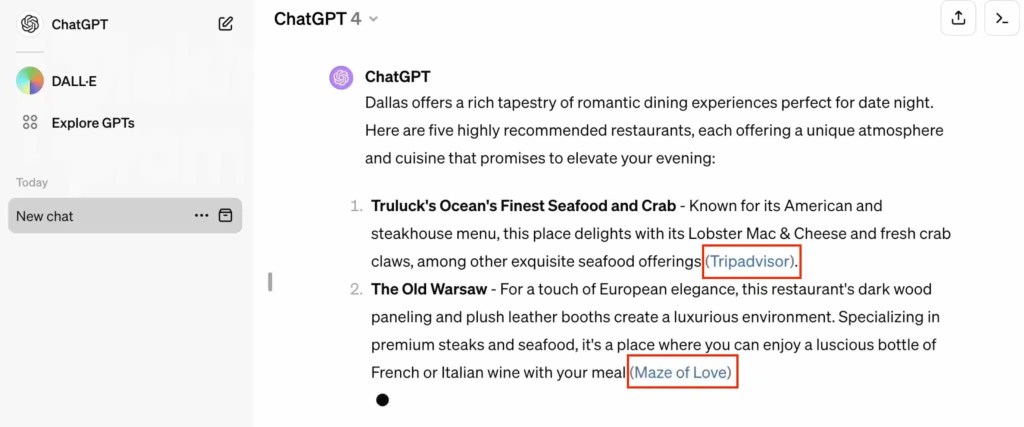
Link referral from ChatGPT, one of the examples of AI SEO. Source: Search Engine Land
Types of AI Answer Engines
People today want straightforward answers quickly and naturally, no longer typing short keywords but full questions, expecting an instant response. For businesses, this means creating content that is concise, structured, and easy for AI systems to identify as the best possible answer.
And this is exactly how these 4 types of AI answer engines are built for:
- Generative AI Chatbots: These engines are designed to provide responses in a natural, conversational style. They are particularly effective for more complex or open-ended queries, where users expect detailed explanations rather than a single fact. Generative AI chatbots focus on delivering clear and well-structured answers, making them useful when users want information that feels tailored to their full question.
- Voice Assistants: Voice assistants allow users to ask questions verbally and receive instant answers. They are most valuable in situations where people need quick, hands-free solutions, such as when they are busy or multitasking. These engines emphasize speed and clarity, giving users direct responses without requiring them to interact with a screen.
- AI-Powered Search Tools: AI-enhanced search tools integrate artificial intelligence into traditional search results. They generate summaries and insights directly on the results page, reducing the need for users to click through multiple links. Their purpose is to simplify the search experience by providing immediate, structured responses that align with user intent.
- Multimodal Tools: Multimodal engines go beyond text-based answers by combining different formats such as text, images, and video. This creates richer, more complete responses that help users when the query requires more context. They are designed to provide comprehensive answers in a format that best matches the type of information being requested.
What Is SEO?
Search Engine Optimization (SEO) is the foundation of digital visibility, a practice that’s been shaping the web since the 1990s. At its core, SEO is about making your website easy for search engines like Google and Bing to find, understand, and rank, so that more people discover your business online.
SEO strategies focus on boosting a website’s position in the search engine results pages (SERPs). When someone types in a keyword or phrase, SEO helps ensure your site appears near the top of those results. This involves a mix of practices such as optimizing keywords, improving page speed, building backlinks, and publishing content that is both useful and trustworthy.
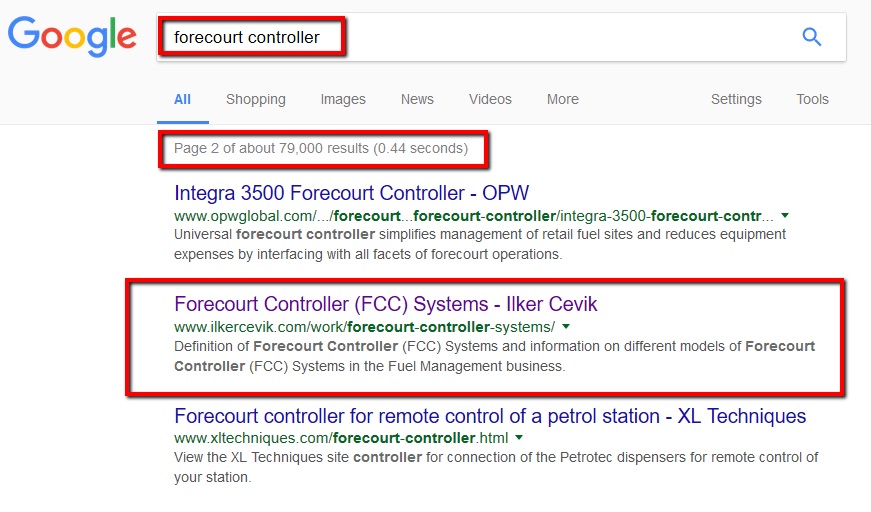
Traditional SEO means showing up on search engine’s result page through a keyword. Source: Outlier Tech
A good SEO approach works across every stage of the marketing funnel, from generating awareness by attracting new visitors, to nurturing interest through helpful resources, and ultimately driving conversions.
Unlike AEO, which delivers direct answers, SEO usually presents users with a ranked list of links and snippets, leaving them to decide which site to visit. The higher your site ranks, the more clicks, leads, and opportunities you’re likely to gain.
How Do Answer Engines Actually Work?
Now that you know what answer engines are, the next step is understanding how they deliver those quick, precise answers that users love. Unlike traditional search engines that give you a list of links, answer engines work behind the scenes to figure out exactly what you’re asking and provide the most direct response. Here’s how the process unfolds:
- Understanding the Question: Answer engines don’t just scan for keywords. They look at the entire query to understand the meaning behind it. They break it down into smaller parts, identifying the main topic, the type of answer needed, and any details that might shape the response.
- Analyzing Intent and Context: Beyond the words themselves, answer engines figure out what you’re really looking for. For example, they can tell whether you want a definition, a step-by-step guide, or a recommendation, and they consider the context of your query to refine the answer.
- Searching Through Data: Once they know what you want, answer engines search through enormous amounts of information. They scan websites, databases, and other sources to find the most relevant and trustworthy material.
- Generating or Summarizing Responses: Here’s where AI makes a big difference. Some engines simply pull responses from trusted sources or summarize existing content. Others, powered by generative AI, can create fresh, human-like answers by predicting and stitching together words based on what they’ve learned from massive datasets.
- Delivering the Answer: Finally, the answer is presented instantly, right where you asked the question. This eliminates the need to click through several pages, making the search experience faster, simpler, and more focused on exactly what the user needs.
How Does AEO Differ From Traditional SEO?
Search is changing, and with it, so is the way businesses need to think about optimization. Traditional SEO has been the standard for more than two decades, built on keywords, rankings, and driving clicks. But the rise of AI-driven platforms has introduced a new approach: Answer Engine Optimization (AEO). Where SEO aims to bring users to your website, AEO is about making your content the direct answer people see in AI-powered tools.
So, how does AEO differ from traditional SEO? Let’s take a closer look at the differences across goals, methods, content, search behaviors, and success metrics.
1. Goals and Objectives
Traditional SEO is focused on visibility in search engine results pages (SERPs). The goal is simple: rank as high as possible for relevant keywords so users are more likely to click through to your site. The higher your ranking, the more traffic you attract, and the more opportunities you create to convert that traffic into leads or sales.
AEO, on the other hand, shifts the goal from clicks to direct visibility. Instead of waiting for users to scroll through a list of links, AEO ensures your brand’s content appears directly in AI-generated answers.

AI Overview by Google shows an answer with links to references right on top of the SERP. Source: Seobility
Whether it’s a response from Google AI Overviews, Microsoft Copilot, or ChatGPT, AEO aims to position your content as the trusted answer. This builds brand authority in a search environment where users increasingly expect fast, conversational responses.
2. Optimization Methods
Traditional SEO relies on a tried-and-true toolkit of techniques:
- Keyword research and placement to match user queries.
- Backlink building to strengthen domain authority.
- Metadata optimization to make pages more clickable.
- Technical improvements like site speed, crawlability, and mobile responsiveness.
- Content creation designed to align with search intent and rank for multiple terms.
These methods are effective in driving consistent organic traffic but are heavily centered around pleasing traditional search engines.
AEO, while still rooted in SEO fundamentals, requires a more specialized approach:
- Structured content that provides answers upfront rather than burying them in long text.
- Schema markup and structured data to help AI systems parse and understand information quickly.
- Conversational optimization, aligning content with how people naturally ask questions rather than forcing rigid keyword phrasing.
- Authority signals like reviews, topical clusters, and concise formatting that establish credibility for AI-generated responses.
Where SEO is about optimizing for rankings, AEO is about optimizing for interpretation, making sure AI engines can clearly read, extract, and trust your content.
3. Content Formats
Traditional SEO favors longer-form content. Blogs, articles, eBooks, and whitepapers allow businesses to cover topics in depth while strategically placing keywords. These formats work well for ranking in SERPs because they provide detailed answers that appeal to both users and search algorithms.
AEO, however, thrives on concise, scannable formats. Instead of long explanations, AI engines prefer snippets that are easy to pull into answers. This includes:
- FAQs, with direct questions and short, structured answers.
- Featured snippets, optimized with lists, tables, or step-by-step explanations.
- People Also Ask sections, where concise, context-rich responses can help your brand appear multiple times.
- Schema markups, which label your content for quick recognition by AI systems.
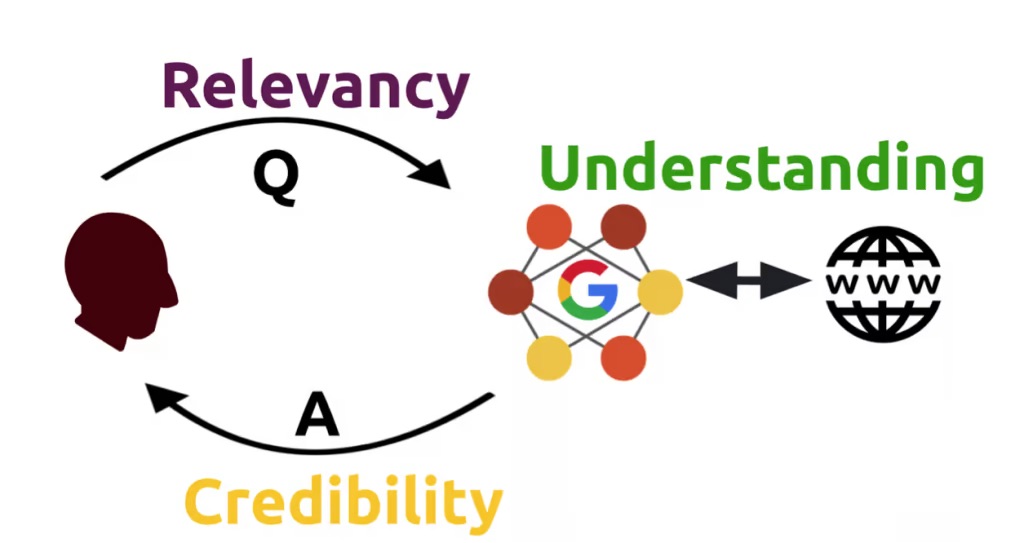
The process of how schema markups help AEO & traditional SEO understand users’ input. Source: Swydo
This doesn’t mean long-form content is obsolete; it still matters for SEO, but AEO requires structuring that content in a way that highlights short, precise answers alongside detailed explanations.
4. Search Behaviors
Traditional SEO evolved around typed searches. Users would enter keywords or short phrases, and Google or Bing would return a list of results. Over time, strategies expanded to include long-tail keywords to capture more specific queries.
AEO is built for the new era of conversational search. People aren’t typing just keywords anymore, they’re asking full questions in natural language. Increasingly, they’re also using voice assistants and AI chatbots, expecting an instant answer.
Instead of “best Italian restaurant NYC,” a user might ask, “What’s the best Italian restaurant near me that’s open right now?” AEO caters to this behavior by prioritizing clarity, context, and relevance in direct answers.
5. Metrics of Success
One of the clearest ways to see how does AEO differ from traditional SEO is in how success is measured. The performance indicators that define a strong SEO strategy are not the same ones that show AEO is working.
Traditional SEO has long relied on measurable factors that show how visible a website is in search engines:
- Keyword rankings – Tracking how well your site ranks for specific target keywords.
- Organic traffic growth – Monitoring how many users land on your site from unpaid search results.
- Click-through rates (CTR) – Measuring how often people click on your link after seeing it in search results.
- Domain authority improvements – Evaluating the credibility of your site based on backlinks and trust signals.
These metrics are useful because they reveal how much visibility you’re gaining and how effectively you’re attracting visitors from Google or Bing.
AEO requires a different lens. Instead of focusing on clicks, it focuses on direct visibility inside AI-powered search results. If you’re asking, “how can I measure AEO success?” here are the key benchmarks to track:
- Citations in AI-generated answers – How often your content is directly pulled into responses on platforms like ChatGPT, Gemini, or Microsoft Copilot.
- Presence in featured snippets and AI overviews – Tracking whether your content appears in Google AI overviews, People Also Ask (PAA) sections, or voice results.
- Voice assistant mentions – Measuring when your brand is included as the spoken answer from assistants like Alexa or Siri.
- Brand mentions in conversational outputs – Monitoring whether your business is cited or recommended in generative AI outputs beyond traditional search.
- Structured data visibility – Ensuring schema markup is being used effectively so AI systems can easily interpret your content.

Monitoring AEO performance is totally different from traditional SEO. Source: Webyansh
In short, while SEO success is all about driving traffic, AEO success is about proving authority and trust in AI-driven environments. For businesses, this means tracking not only if people can find your site, but also if AI systems consistently recognize and promote your brand as the most reliable answer.