Key Takeaways
- AEO (Answer Engine Optimization) is the practice of structuring content so AI-driven platforms like ChatGPT, Google’s snippets, or Alexa can directly deliver it as the answer to user queries, rather than just linking to a webpage.
- While SEO helps websites rank higher in search results, AEO focuses on making content the answer itself. This shift ensures businesses remain visible as search moves toward conversational queries and AI-powered answers.
- Optimizing for AEO means clear formatting, adding structured data, creating original insights, maintaining consistent off-site signals (reviews, listings, backlinks), and tracking mentions across answer engines to stay ahead in AI-driven search.

It’s not hard to understand AI SEO. Yet, implementing it is where most businesses struggle.
That’s where ROI Digitally’s AI SEO Optimization Service comes in. Our team goes beyond theory with Answer-Ready Content Creation and Strategic Placement of Answers, ensuring your business isn’t just found, but featured in Google AI Overviews, ChatGPT responses, and other AI-first search engines.
If you’re serious about turning AEO into results, visit us to see how we can help your brand stay visible on AI search answers.
What Is AEO?
If you’ve ever wondered what is AEO in digital marketing, the answer is simple: AEO stands for Answer Engine Optimization.
It’s the practice of optimizing your content so that answer engines, like Google’s featured snippets, voice assistants (Siri, Alexa), or even AI-powered tools, can pull your content and present it directly as the best possible answer to a user’s question.
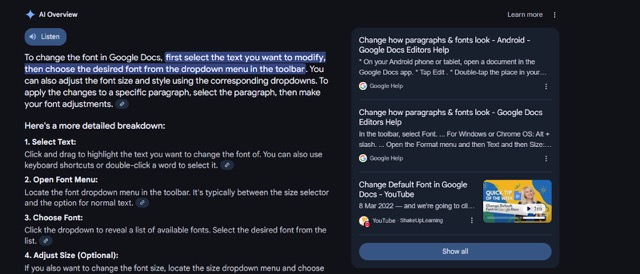
Google AI Overview is an example of optimizing for AI SEO. Source: Writesonic
Instead of focusing only on keywords, AEO is all about understanding what does AEO mean in the bigger picture: delivering clear, concise, and direct answers that match user intent.
For example, when someone searches “what is aeo seo,” they’re not looking for a long story, they want a straightforward definition. That’s where AEO comes in.
In short, AI SEO is about structuring your content in a way that makes it easy for search platforms to recognize and showcase it as an instant answer. This includes:
- Writing clear, to-the-point responses
- Using headings and bullet points for readability
- Building authority with well-structured content
By doing this, your business or website increases its chances of being the go-to answer in today’s search results, whether it’s on Google, in voice searches, or inside AI chat systems.
Why AI SEO Optimization Is No Longer Optional
AI has completely changed how search engines work. It’s not just about improving results, it’s about redefining how Google understands questions and delivers answers. With the launch of AI Overviews, Gemini 2.5, and query fan-out, Google no longer relies on keywords alone. Instead, it breaks down a user’s question into smaller pieces, analyzes the intent, and serves up the most relevant content.
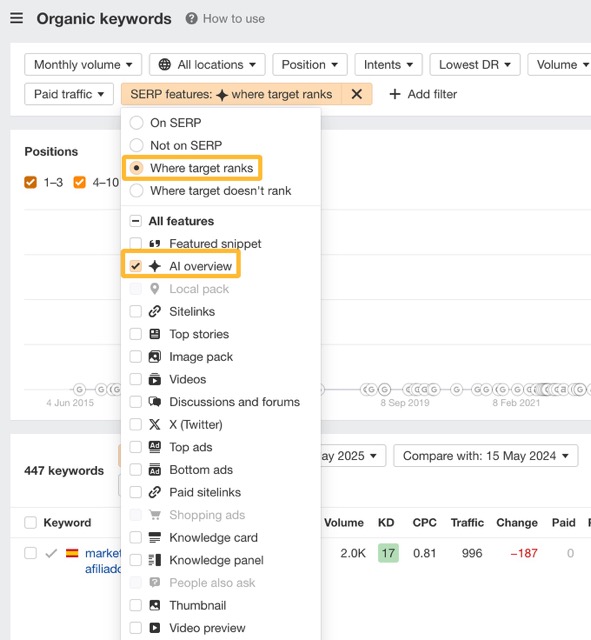
Popular SEO tools like Ahrefs have to quickly add their new tracking feature for users to monitor their AI SEO performance. Source: Ahrefs
This shift makes AI SEO optimization a necessity, not a choice. If your content isn’t structured for AI-driven search, it simply won’t surface when users are asking detailed or conversational questions.
The data speaks for itself.
Each week, more than 400 million people turn to OpenAI’s ChatGPT and similar tools to find information. Microsoft’s move to add AI chat features led to a 4× surge in Bing mobile app downloads, showing just how quickly users are embracing this shift. Looking ahead, by 2026, a quarter of all organic search traffic will move away from traditional clicks and flow instead through AI chatbots and virtual assistants.
Machine learning is now the backbone of search rankings. Instead of only matching keywords, Google’s ranking systems predict relevance by analyzing patterns, relationships, and context.
With models like RankBrain, BERT, and neural matching, search engines can figure out that a query about “the consumer at the top of a food chain” really means apex predator. This is why semantic search and NLP (Natural Language Processing) are so important, they allow Google to interpret meaning, not just words.
What Is AEO vs SEO?
To really understand what is AEO, it helps to compare it directly with traditional SEO. Both aim to increase online visibility, but the way they do it is different. In particular,
- SEO (Search Engine Optimization) focuses on improving your website’s ranking in search engine results pages (Google, Bing, etc.). The goal is to drive clicks to your site by targeting keywords, building backlinks, and optimizing technical elements like speed and mobile-friendliness. In other words, SEO helps your site get found and visited.
- AEO (Answer Engine Optimization), on the other hand, is about making your content the answer itself. Instead of just showing up as a link, your content is positioned to appear in featured snippets, AI chatbots (like ChatGPT or Microsoft Copilot), and voice assistants. If someone asks a full question, like “what is AEO vs SEO?”, the goal is for your content to be the short, clear answer that gets delivered directly.
Here’s a quick breakdown:
| Aspect | SEO | AEO |
| Platform | Search engines (Google, Bing) | Answer engines (featured snippets, Knowledge Graph, ChatGPT, voice assistants) |
| Queries | Keyword-based, often short | Conversational, long-tail, full questions |
| Goal | Rank high and attract clicks | Provide the best direct answer (sometimes without a click) |
| Content Style | In-depth, keyword-rich | Clear, concise, answer-first, then details |
| Technical Focus | Crawlability, mobile-friendly, speed, meta tags | All of SEO + structured data and formatting for AI extraction |
| Metrics | Rankings, traffic, CTR, backlinks, conversions | Featured snippet count, mentions in AI answers, voice search visibility, brand citations |
While SEO builds the foundation for visibility, AEO ensures your content is ready for the AI-driven future of search. The two are not competitors, they’re complementary. Strong SEO practices help you rank, while AEO ensures you’re the one delivering direct answers in AI chats, voice searches, and featured snippets.
The Algorithm of AI SEO
Answer Engine Optimization works by making content easy for AI-driven systems to understand and deliver directly as an answer. This evolution matters because users now expect quick, accurate responses without scrolling through multiple links. Voice assistants like Alexa or Siri and AI chatbots like ChatGPT reflect this shift, delivering answers instantly.
Understanding Intent with NLP
Answer engines use natural language processing (NLP) to interpret what a user really wants to know. For example, a query like “How do I start a garden?” isn’t treated as one keyword. The engine recognizes it as a series of steps, soil preparation, seed selection, and watering, and seeks content that explains the process clearly.

Google’s NLP algorithm to process your query. Source: Stan Ventures
AI and Machine Learning Models
Behind the scenes, AI models such as Google’s BERT, MUM, and Gemini or Bing’s GPT-4 analyze queries and content together. Trained on massive datasets, these models can understand language patterns and provide answers that feel precise and conversational.
Structured Data and Knowledge Graphs
Answer engines also rely on structured information to verify and present answers. Google’s Knowledge Graph, for example, pulls facts from trusted sources. Adding schema markup, like FAQs or product details, helps engines understand and feature your content as a direct response.
How To Get Started With AEO
Getting started with answer engine optimization might seem overwhelming, but it’s actually pretty straightforward once you break it down. Here’s your step-by-step roadmap to begin optimizing for AI-powered search engines like ChatGPT, Claude, and others.
1. Set Your Goals and Success Metrics
Before diving in, you need to know what success looks like. Since answer engine optimization is still relatively new, it’s smart to start with realistic, achievable goals.
Consider aiming for something modest at first – maybe getting your business mentioned once or twice when people ask related questions. As for measuring success, focus on metrics you can actually track, like:
- How many times you get cited or mentioned
- Traffic coming to your site from answer engines
- Overall referral traffic increases
Give yourself about three months to see initial results. This timeframe gives you enough data to understand what’s working and helps build support for continuing your efforts.
2. Build Your Strategy
Now it’s time to do some homework. Start by taking a closer look at:
- How well your current SEO is performing
- What questions your target audience is actually asking
- Which answer engines your customers prefer using
- How visible your competitors are in these platforms
This research will help you decide where to focus your energy. Maybe your audience loves using Meta AI, so that should be your priority. Or perhaps you need to fix some basic SEO issues before tackling answer engine optimization.
Pro tip: Set up tracking in Google Analytics 4 now. Create a custom channel group that separates regular referral traffic from answer engine traffic. You can use some simple code patterns to identify this traffic – just ask an AI tool to help you set it up!
3. Optimize Your Website
This is where the real work happens, and it starts with making your content discoverable. You need to ensure search and answer engines can actually crawl and index your site by creating an XML sitemap and building 3-5 internal links pointing to each important page on your website.
When it comes to your actual content, focus on structure and user experience. Use clear headings and organized lists to break up information, keep your paragraphs short and scannable, and enhance your content with specific instructions, personal anecdotes, or compelling quotes that make it stand out from generic information.
The most impactful content optimizations include:
- Using headings, lists, and short paragraphs for better readability
- Adding specific examples, stories, or quotes that make your content unique
- Creating original research or reports using internal data or surveys
- Including custom multimedia like graphics, videos, or GIFs

Optimize your website for AI search. Source: Digital Marketing Solutions – MVDS Digital
Consider generating schema markup for your content – things like Recipe, FAQ, and Article schemas help engines understand what your content is about. Visual elements matter too, so include custom images and videos that explain concepts, highlight your findings, and walk readers through complex steps. Think of it this way: if a human can easily understand and use your content, an AI probably can too.
4. Off-page Optimization
Your website isn’t the only place that matters. Search engines also look at what’s happening around the web to decide how trustworthy and authoritative your brand is. That’s where off-site optimization comes in.
- Build backlinks the right way: Think of backlinks like word-of-mouth recommendations. When another credible site links to yours, it signals to search engines that your content is worth paying attention to. You can earn these links by publishing original research, sharing unique insights, or even creating handy tools that people naturally want to reference.
- Keep local listings accurate: If you run a local business, your name, address, and phone number need to be correct everywhere, especially on Google Maps and online directories. Consistency makes it easier for both customers and search engines to trust your business information.
- Claim your social profiles: Even if you don’t post every day, having updated and verified social media profiles ensures your brand looks professional and consistent. It also helps people (and search engines) connect the dots between your website and your online presence.
- Encourage genuine reviews: Positive, authentic reviews on trusted platforms like Google or Yelp can go a long way. They not only build credibility with potential customers but also signal to search engines that your business delivers real value.
5. Track Your Progress
Here’s the reality: measuring answer engine optimization success takes some manual work right now. The basic process looks like this:
- Search for questions related to your business in different answer engines
- Check if your business gets mentioned or cited
- Repeat across multiple platforms
- Document what you find
This can be time-consuming, but some specialized tools are starting to automate this process. Whether you do it manually or use a tool, make sure you’re consistently tracking your progress.
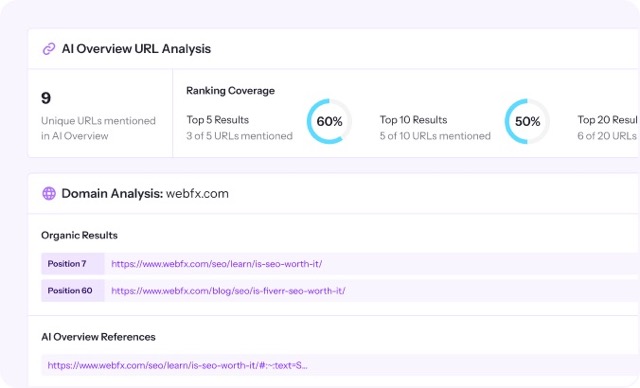
Utilize AI SEO tools to tailor your monitor for AI search performance. Source: SEO.com
If you’re not seeing results after a few months, take a look at your competitors who are getting mentioned. What are they doing differently? Do they have more unique content or stronger authority signals? Use these insights to refine your approach.
Frequently Asked Questions
- What does AEO stand for?
AEO stands for Answer Engine Optimization. It’s the practice of tailoring content so that AI-driven answer engines, not just traditional search engines, can understand and present it directly to users.
- What is AEO vs SEO?
SEO focuses on ranking in search engine results, while AEO ensures your content is optimized to be picked up and directly answered by AI systems, chatbots, and voice assistants.
- What is AEO in AI?
In AI, AEO means optimizing content so that language models and AI-driven tools can accurately use it when generating human-like answers.
- What is the role of AEO?
AEO helps businesses gain visibility in the era of AI-driven search by making their content structured, clear, and authoritative, so it’s more likely to be delivered as a trusted answer.