Key Takeaways
- Organic search refers to the unpaid search results on Google or other engines. It’s based on how relevant your content is to a user’s query, not on how much you pay.
- To increase organic visibility, you need to track key performance indicators like keyword rankings, number of visitors, bounce rate, and time on page. Tools like Google Analytics, Google Search Console, SEMrush, and SE Ranking will help you measure precisely.
- Strategies like refreshing outdated content, improving internal links, translating top-performing posts, or simply writing more engaging titles can significantly boost organic search traffic.

Organic search
Ready to grow your organic search traffic and rank higher, without paying for every click?
Let ROI Digitally help you unlock sustainable SEO results. Our team specializes in data-driven strategies that boost visibility, drive long-term traffic, and deliver measurable ROI.
Start your SEO journey today with ROI Digitally – Digital Marketing Agency.
What Is Organic Search?
To simply explain, organic search is when someone finds your website on Google (or another search engine) without you paying for ads. These are the natural, unpaid listings that show up based on how relevant your site is to what the person searched for.
Let’s say someone types “best hiking boots” into Google. If your blog post about hiking boots shows up near the top of the results without you running an ad, that’s organic search traffic. It means Google thinks your content is helpful and relevant, so it ranks it highly on its own.
Unlike paid ads (which say “Sponsored”), organic search results are earned by using smart SEO strategies, like writing useful content, using the right keywords, building links from other trusted websites, and having a strong, trustworthy domain.
The better your SEO, the more likely you are to show up in the organic results, and the more free traffic you’ll get. That’s why organic search is a big deal for any website or business trying to grow online.
Why is Organic Search Important?
Organic search is one of the most valuable sources of website traffic.
When people ask “what is organic search?”, it means the free traffic you get from search engines like Google, without paying for ads. This organic search traffic shows up because your content is useful, trustworthy, and optimized for what people are actually searching for.
Now, why does this matter?
- It brings long-term results: While paid ads stop working the moment you stop paying, organic search keeps bringing visitors over time, without extra cost.
- It’s cost-effective: Once your content ranks high, it can keep attracting clicks for months or even years. No need to keep buying ads every month.
- It helps you beat competitors: A strong organic search strategy helps your site show up ahead of others in search results. That means more visibility, more trust, and more traffic.
- It attracts the right people: When your site appears for relevant keywords, you’re reaching people who are already looking for what you offer. That’s why organic search traffic often leads to better leads and higher conversion rates.
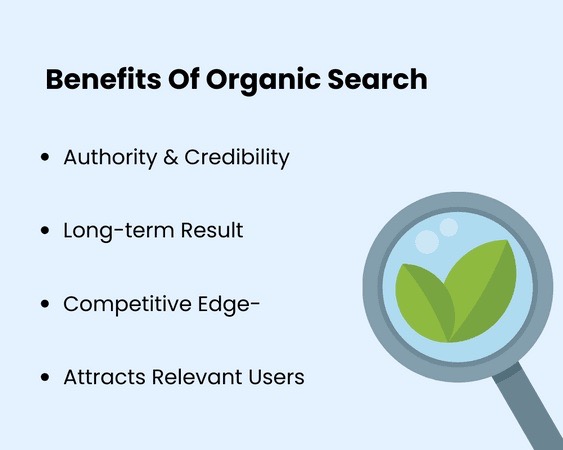
Benefits of organic search. Source: Sekel Tech
Paid Search vs Organic Search: What’s the Difference?
When it comes to getting visitors to your website, two main strategies come up a lot: paid search vs organic search. Let’s break them down.
Organic Search:
- This is when people find your website naturally, without you paying for ads.
- The results show up in the middle of the page, below the paid ads.
- Getting to the top spot takes time and effort, but once you’re there, it brings consistent organic search traffic.
- It’s free, but requires good SEO strategies (like writing useful content, using the right keywords, and building links).
- It’s a long-term investment, while slow to build, but more sustainable in the long run.
Paid Search:
- This is when you pay for your website to appear at the very top of the search results.
- You get instant visibility by bidding on keywords.
- Once you stop paying, your traffic stops too.
- Paid search works well for short-term results, like launching a product or promoting a sale.
- But it requires ongoing budget and regular campaign management.
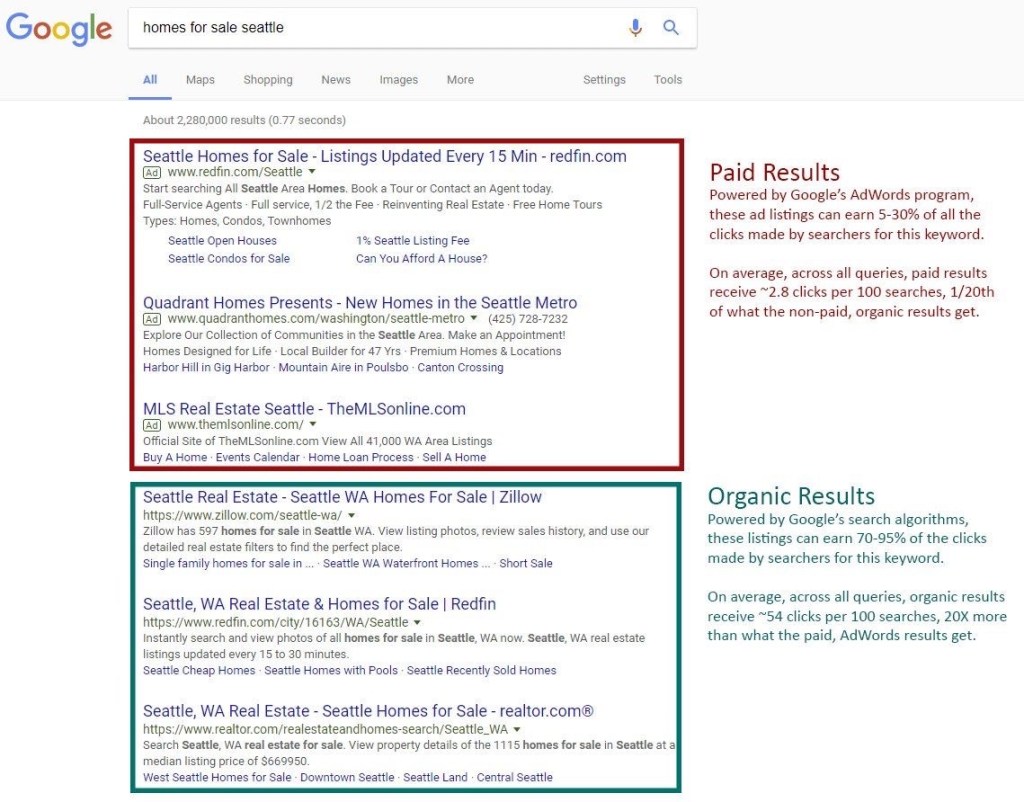
Example of Organic vs Paid search. Source: Conductor
How to Track Organic Search Performance
Tracking how your website performs in organic search is essential if you want to grow your online presence and increase organic search traffic. Here’s how to do it effectively:
Key Metrics to Track for Organic Search
- Keyword Ranking: This shows where your site appears in search results for specific keywords. Higher rankings mean more visibility. Tracking keyword positions helps you understand if your SEO efforts are working and which terms bring the most value.
- Number of Visitors (Organic Traffic Volume): This measures how many users visit your site from unpaid search results. A steady or growing number of visitors indicates that your organic visibility is improving.
- Average Page Views: This metric tells you how many pages a visitor typically views during one session. A low number could suggest that your content isn’t engaging enough or that users are not finding what they need.
- Bounce Rate: Bounce rate is the percentage of visitors who leave your site after viewing only one page. A high bounce rate might mean the content doesn’t match their expectations, loads too slowly, or isn’t useful.
- Average Time on Page: This measures how long visitors stay on a particular page. Longer times usually mean users are finding the content helpful. Shorter times may indicate the opposite.
Tools to Track Organic Search
- Google Search Console: This free tool from Google shows how your site is performing in search. It helps track keyword rankings, click-through rates, search impressions, and any issues affecting visibility (like mobile usability or indexing problems).
- Google Analytics: Google Analytics tracks all types of traffic, including organic search traffic. It provides insights into user behavior, such as which pages get the most visits, how long people stay, and where they come from. It separates traffic sources like organic, paid, referral, and social.
- SE Ranking: SE Ranking is a full SEO platform that helps you monitor keyword positions, run site audits, analyze competitors, and generate customizable reports. It’s useful for tracking long-term SEO progress and comparing results over time.
- SEMrush: SEMrush is a competitive analysis tool that helps identify what keywords your competitors are ranking for, how much traffic those keywords generate, and how your rankings compare. It’s especially useful for in-depth keyword research and tracking changes in organic visibility.

Google Search Console tracks for organic search. Source: Akkio
How to Increase Organic Search
1. Refresh Pages with Outdated Information
If your content is old, it can fall behind in Google’s rankings, even if it used to perform well. That’s because search engines (and readers) want current, relevant information.
For example, if you wrote an article in 2021 with statistics, readers in 2025 won’t find it helpful. Updating those old posts with fresh data or new insights can help you reclaim lost traffic quickly.
This is one of the easiest ways to improve organic search performance, especially for content that previously ranked well but has started to drop.
2. Make Your Content More Relevant
Search engines favor pages that fully answer a searcher’s question. If your content only touches the surface of a topic, it may get passed over for more in-depth alternatives.
By identifying what’s missing, like important subtopics or commonly asked questions, and adding those to your article, you make your page more complete. This boosts organic search traffic because Google sees your content as more helpful.
In short, don’t just write around a keyword: go deep, cover everything the reader needs, and your rankings will likely improve.
3. Redirect Dead Pages with Backlinks
If you’ve deleted a page that had backlinks (links from other websites), you’re wasting valuable SEO power.
404 error heavily affects organic search. Source: SEOptimer
These backlinks are like votes of trust, and search engines use them to rank pages. Instead of letting that trust go to waste, you can redirect the old URL to a related, active page on your site.
This passes the value of those backlinks to the new page, giving it an SEO boost. It’s a quick win that helps you keep your organic search efforts efficient and effective.
4. Boost Pages with Internal Links
Internal linking is when you connect one page on your website to another. It helps search engines discover and prioritize important pages, and also keeps visitors exploring your site longer.
For example, if you mention a topic in one article that you’ve written about more deeply elsewhere, linking between them helps both pages.
It’s like creating a network within your site that pushes more attention toward your most valuable content, making it easier to improve your organic search traffic without writing new content.
5. Go After Featured Snippets
Featured snippets are those answer boxes you often see at the very top of Google’s results. They take up a lot of space, which means more visibility and clicks.
You can win a featured snippet by rewriting a section of your content to directly answer a common question: clearly, briefly, and accurately.
If your page already ranks in positions 2 to 8, this is a great shortcut to get to the top without needing a full SEO overhaul.

A featured snippet. Source: Brodie Clark
6. Translate Your Top-Performing Content
Your best articles in English might not rank in other countries simply because they aren’t in the local language.
By translating these high-performing pages, you open your content up to new audiences who are searching for the same topics. Google often shows results based on location and language, so even if someone searches in English, they’ll prefer results in their native language.
This approach helps you grow organic search traffic globally without starting from scratch.
Read more: How To Rank Higher On Google Search
7. Turn High-Performing Videos into Blog Posts
If you already have successful videos, chances are the topics are popular in search too.
Turning these videos into blog posts lets you reach people who prefer reading over watching.
Plus, written content ranks better in Google than videos alone.
Repurposing saves time, meaning you already know the content works, so turning it into a blog post helps you gain even more organic traffic from people searching for that topic.
8. Write Better Titles Using ChatGPT
Even if your page ranks well, a boring title can stop people from clicking. Writing more attractive, keyword-rich titles can boost your click-through rate, meaning more traffic without changing your ranking.
You can use tools like ChatGPT to brainstorm titles that are catchy and informative. Small wording changes can make a big difference. It’s a quick, low-effort way to improve how your content performs in organic search.

An effective prompt decides how quality your answer is on ChatGPT. Source: Startup Hyderabad
9. Use Schema Markup for More Visibility
Schema markup is a bit of extra code that helps Google understand your content better. When used right, it can lead to “rich results”, things like star ratings, FAQs, or event times showing directly in the search results.
These extras make your page stand out, which means more clicks and more organic search traffic. It doesn’t help you rank higher, but it enables you to get noticed even if you’re not in the #1 spot.
10. Consolidate Similar Pages
If you have two or more pages targeting the same keyword or search intent, they might be competing against each other in search results. This is called cannibalization. Instead of helping your SEO, it can actually hurt your rankings.
The solution is to combine the pages into one stronger, more complete article. You keep the best parts, remove duplicates, and redirect the weaker pages to the new one.
It clears confusion for search engines and gives you a better shot at ranking higher and driving more organic traffic.