
In digital marketing, short-tail keywords remain a crucial element for online visibility. But what are they exactly, and how do you find them? This article will answer all these queries and lead you to succeed in the digital world.
Whether you’re a seasoned marketer or a beginner, follow us as we reveal everything you need to know about keywords.
What are Short-Tail Keywords?
Short-tail keywords, also called head terms, are a category of search queries that encompass broad topics and boast high search volumes. It is in direct contrast to long-tail keywords, which are more specific and have lower search volumes.
The terms “short-tail” and “long-tail” are from their placement on the “search demand” curve. At the head of the curve, situated on the left, are a limited number of queries that garner an exceptionally high monthly search volume, often surpassing 100k.
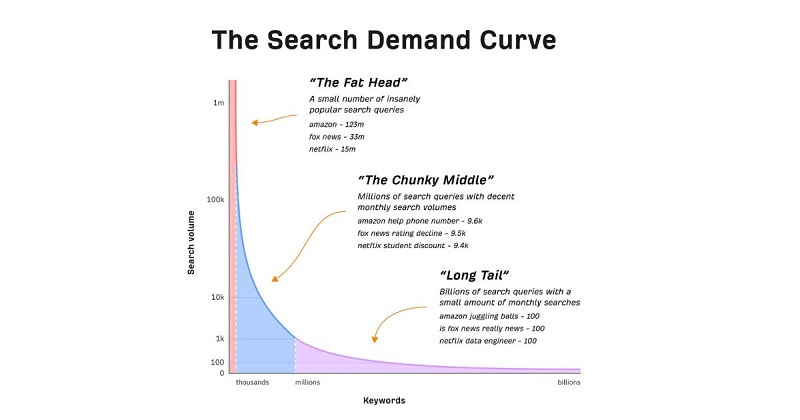
Conversely, as one moves towards the right side of the curve, the number of keywords expands, accompanied by a diminishing monthly search volume.
Contrary to a common misunderstanding, the classification of short-tail keywords is not based on the number of words they contain. While some may define them as one or two-word search terms, this oversimplification doesn’t capture the term accurately.
Notably, there are three-, four-, or five-word queries classified as short-tail keywords, such as “restaurants near me,” with significantly higher search volume than “restaurants.”

Simply put, “short-tail” and “long-tail” aren’t about keyword length; they’re about the broad or specific search queries. Knowing this difference is crucial for creating successful SEO strategies and tailoring content for various search situations.
Short-Tail Keyword Examples
To help you understand further, let me provide examples showing the difference between short-tail and long-tail keywords.
The first example is “real estate” as the seed keyword. Here are examples of its variations:
- real estate
- real estate housing market
- Clarence Thomas Harlan Crow real estate
- commercial real estate

As you can see, the phrases “real estate” and “real estate housing market” have higher search volume and are less specific than “Clarence Thomas Harlan Crow real estate.” Therefore, they are both considered “short-tail keywords“.
Another example of a short-tail keyword is “fitness equipment.” Its variations include:
- planet fitness equipment
- fitness equipment stores
- rogue fitness equipment
- fitness equipment near me
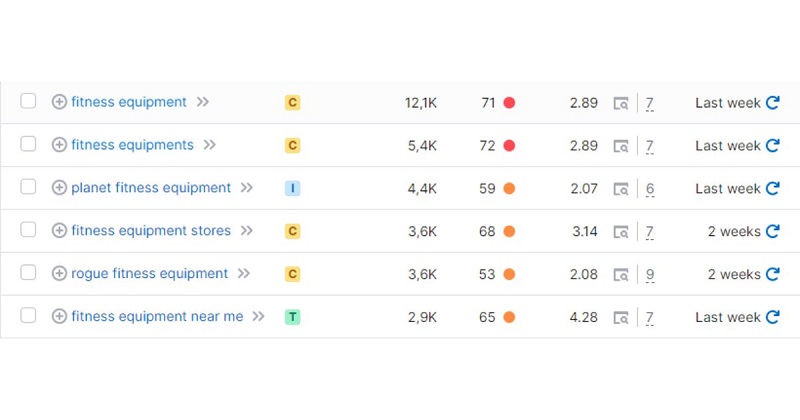
The short-tail keyword “fitness equipment” covers a wide range of products and brands. By optimizing for long-tail variations based on specific brands like Planet Fitness and Rouge Fitness, your website can attract users with clear intent, improving both relevance and conversion rates.
Why Are Short-Tail Keywords Important?
Short-tail keywords are critical for many reasons:
Foundation of Keyword Research
Short-tail keywords are the starting point for effective keyword research. They generate diverse ideas, expanding various potential semantic keywords for content optimization.
For example, you have an online handbag store and want to know what topics your customers are interested in. Here is what you get when searching the short-tail keyword “handbag”:

Considering “handbag” as the seed keyword, you can easily have a list of trending long-tail keywords and mid-tail keywords, such as:
- top branded handbags for ladies
- designed handbags
- branded handbags online
- myntra handbags
You can gain insights into your target audience’s goals and interests by analyzing this keyword list and user behavior around the “handbag” term. This understanding is vital for creating content that aligns with users’ needs.
Potential for Organic Search Traffic
Short-tail keywords typically have high search volumes, meaning many actively search for information using these terms. We can easily see the search volume difference between “handbag” (314,3k) and “top branded handbags for ladies” (12,4k) in this photo:

Short-tail keywords like “handbag” represent broad and general topics, making them popular search queries. When your website appears near the top of search results for these terms, you tap into a larger audience pool.
Moreover, people often use short-tail keywords in the early stages of their research or buying journey. Therefore, ranking for these terms provides an opportunity to capture users at the beginning of their online exploration. This initial engagement can lead to brand awareness, trust-building, and increased chances of retaining users.
Brand Visibility
Brand visibility is crucial to online success, and short-tail keywords play a pivotal role in enhancing it. When your website consistently ranks prominently for broad, short-tail keywords, it strongly associates your brand with the general subject matter.
By appearing at the top search results for those search terms, your brand becomes more visible to users exploring general topics related to your industry. This increased visibility extends your reach to a diverse audience who are unfamiliar with your specific brand but actively searching for information within your niche.
Moreover, the repetition of your brand in search results for these keywords strengthens its presence in users’ minds. As they meet your brand consistently while searching for general topics, they are more likely to remember and recognize it in the future. This consistent exposure builds brand recall and creates a sense of authority, trust, and reliability.
A strong example is how Myntra appears high in the rankings when you search for the keyword “handbag.” This way, Myntra can reach more potential customers and build brand awareness.

However, it’s crucial to note that short-tail keywords also have some challenges. They are highly competitive, and ranking for them can be difficult, especially for newer websites.
Moreover, short-tail keywords may not always bring highly targeted traffic since they are more general. Therefore, balancing your SEO strategy with a mix of short-tail and long-tail keywords is often the most effective approach. For further instructions and solutions, check out our On-Page SEO Optimization Service.
How Do You Find Short-Tail Keywords?
This section will reveal how to find short-tail keywords in keyword research. To do this, you must use tools, understand what users seek, and know your audience. Here are 3 methods to help you finish this process seamlessly:
Use Google Search Console

Start by checking the seed keywords for your website, especially if you’re already receiving traffic from Google. Follow these steps:
Step 1: Log in to your Google Search Console (GSC) account.
Step 2: Navigate to Performance on the side panel.
Step 3: Click on Queries and sort the list by the number of impressions.
This process will provide you with a list of high-search-volume keywords your site ranks for, even if it may not get substantial traffic from them.
While this method isn’t flawless, it is a good starting point if you have yet to invest in paid keyword research tools.
Try Google Autocomplete
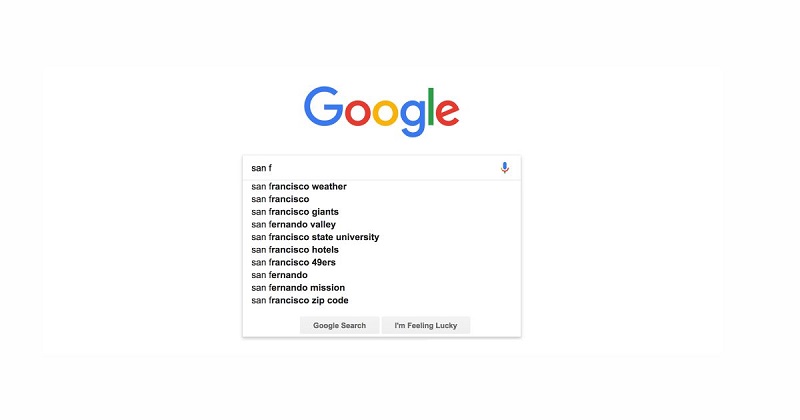
Google’s Autocomplete feature can be a helpful tool for finding short-tail keywords. Here’s a simple guide on using it to discover relevant keywords:
Step 1: Enter a word or phrase related to your topic or industry into Google’s search bar.
Step 2: As you type, Google will start providing suggestions based on popular searches related to what you’ve entered.
Step 3: Pay attention to the suggestions in the dropdown menu below the search bar.
Step 4: Try different variations and combinations of words to generate more Autocomplete suggestions. This step helps you uncover additional short-tail keywords relevant to your content or business.
Besides Google’s Autocomplete, you can use the “People also ask” and “Related searches” to find trending short-tail keywords and optimize your content quickly.
Use Ahrefs’ Organic Keywords Report
Using GSC can only check the ranking keywords for your site or other sites for which you have ownership verification in GSC. However, with advanced SEO tools like Ahref, you can go further.
Suppose you’re a SaaS business offering social media management tools, and buffer.com is one of your competitors. Follow these steps to see what keywords your competitor ranks for:
Step 1: Access the Organic Keywords report for buffer.com in Ahrefs.
Step 2: Organize the list by search volume.
Step 3: Narrow the ranking positions to 1-20 to focus on the most relevant results.

This method allows you to identify the head keywords that your competitors rank for, providing valuable insights into their on-page SEO strategy. Repeat the process for other top websites in your niche, especially those performing well in search engines, to uncover additional short-tail keywords.
Short Tail vs. Long Tail Keywords
Short-tail keywords offer broad visibility with high competition, while long-tail keywords provide specificity and target a niche audience. Then, should I target long-tail or short-tail keywords? Before getting the answer, check out this table to compare their key features.
| Criteria | Short Tail Keywords | Long Tail Keywords |
| Search Volume | High | Low |
| Keyword Difficulty | High | Low |
| Specificity | Less specific | More specific |
| Conversion Rate | Lower | Higher |
| Cost Per Click (CPC) | Higher | Lower |
| Example | “Running shoes” | “Best running shoes for a marathon” |
So, short-tail and long-tail keywords have different pros and cons, and they are both crucial in strategic keyword planning.
Now, if you are wondering how short-tail and long-tail keywords work together, you need to understand how each works. In short, short-tail keywords are typically general and have high search volume, while long-tail keywords provide niche variations. Therefore, both are essential for capturing targeted, less competitive traffic.
When creating content, you can blend long-tail keywords with short-tail ones to avoid keyword stuffing, which might lead to penalties from search engines. This balanced approach ensures your content remains specific and broad, appealing to a wider audience.
Remember to place short-tail keywords strategically in prominent positions like headings, meta titles, and the introduction to capture the attention of a broader audience. Meanwhile, add long-tail keywords naturally within the body of your content, addressing specific queries and providing valuable information to a more targeted audience.
See more: What Is Search Intent?
Frequently Asked Questions
What are mid-tail keywords?
Mid-tail keywords are generally longer phrases consisting of 3 to 4 words, positioned between short-tail and long-tail keywords in terms of specificity. For example, “running shoes for men,” “best family cars,” and “travel destinations in Asia” are mid-tail keywords.
These keywords offer a balance, being more focused than short-tail keywords yet not as detailed as long-tail ones. Typically, they have a moderate search volume, providing a targeted approach with less competition in search results than short-tail keywords.
What are long-tail keywords?
Long-tail keywords are specific, longer phrases used in search queries, addressing niche topics or detailed user needs. They are more focused than short-tail keywords, have lower search volumes, and are valuable for targeting specific audiences in SEO and content marketing.
How do you balance between short-tail and long-tail keywords?
There are several ways to achieve a balanced approach between short-tail and long-tail keywords:
- Align your strategy with your goals, audience, and market dynamics.
- Use short-tail keywords for main topics and pages to attract a broad audience.
- Utilize long-tail keywords for subtopics and posts to engage a more specific and loyal audience.
- Leverage keyword research tools and consider metrics like search volume and competition.
- Use keyword mapping to assign relevant keywords to specific pages.
Final Thoughts
Overall, short-tail keywords are foundational in any robust SEO strategy. That’s why you should use them effectively to build your online presence. With the approaches we shared above to find short-tail keywords, we hope you can enhance visibility and attract relevant traffic. Finally, remember to follow ROI Digitally for more valuable guides and insights!