
A press release is part of SEO and mainly educates your audiences.
So, here is the most asked question: Is it hard to write a press release?
The honest answer from ROI Digitally’s expert, NO – only if you know the proper way to optimize your writing process and implement the right tactics.
But out of various guides out there, how can you find the one that best fits your brand voice and characteristics? If you are struggling with that, this article will disentangle your concern. Read more!
What Is A Press Release?
A press release, one factor of off-page SEO, is a way to let people know about the latest happenings in your business. It’s like a news story you write and then share with others, such as announcing a new product or service launch, introducing a new team member, or a major company change.

The main purpose of writing a press release is to grab the attention of journalists and news outlets to your brand through informative articles. Simply put, a press release is a way for companies to build brand awareness by getting their news out there in their own words.
Your press release format must be short and straightforward to the information you want to deliver. Don’t ask why!
It is so obvious that nobody wants to read a lengthy article with no focus on the main points. Do you agree?
To do that, think about who and where you want your news to be shared.
That way, you can customize your press release for a specific target and tell them why your news is a good fit for them and their audience. For instance, a local paper might be interested in minor news, but more prominent news outlets will want more significant updates.
7 Common Mistakes When Writing Your First Press Release
It is understandable to make mistakes when writing your first press release. But knowing them beforehand can help you best avoid it:
- Failing to Provide a Newsworthy Angle: A press release should always cover something newsworthy – something that people will care about. It might not get the attention it deserves if it doesn’t have a newsworthy angle.
- Neglecting an Engaging Headline: The headline is the catchy part of your press release. It needs to be engaging and grab the reader’s attention right away. Be precise and clear.
- Ignoring the Inverted Pyramid Structure: Press releases should be structured with the most crucial information at the top, followed by supporting details, and then additional background information.
- Forgetting to Add Links: Just like a backlink profile, these relevant links in your press release can drive readers back to your website for more information, it’s like a way to gain potential traffic.
- Not Focusing on the Newsworthy Aspect of Your Story: Your press release should focus on the news aspect of your story, not just self-promotion. It will be misunderstood as an ad if it’s too heavily promotional.
- Lack of Focus and Poor Writing: Though keeping your press release short, it must have a clear focus and be informative. You can easily confuse readers and fail to deliver the right message if it’s unfocused or poorly written.
- Not Defining the Target Audience: Knowing who your press release is for will make your press release more focused. If you don’t define your target audience, your message might not reach the right people.
Why Should We Write A Press Release?
Unlike guest blogging, press releases have been used for decades as a traditional public relations and marketing form. With the rise of digital media and the internet, press releases are now considered a potential way to reach customers.
But why should we write a press release? What purpose does it serve, and how can it benefit us? Let’s find out:
- Gain media coverage
The main purpose of a press release is to get media coverage. Newspapers, magazines, TV and radio stations, blogs, and online news sites are strong sources to increase your visibility and credibility. Only if you can get your press release published on these sites.

- Boost brand awareness
Press releases are a great way to get your brand name out there and increase awareness of your organization or company. By crafting a compelling story, you can create buzz around your brand and attract the attention of potential customers, investors, or partners.
- Control the narrative
One of the visible benefits of writing a press release is having control over the message you want to convey. Unlike news articles written by journalists, a press release allows you to deliver your perspectives without being affected by someone else. This can be especially helpful in times of crisis or when addressing sensitive topics.
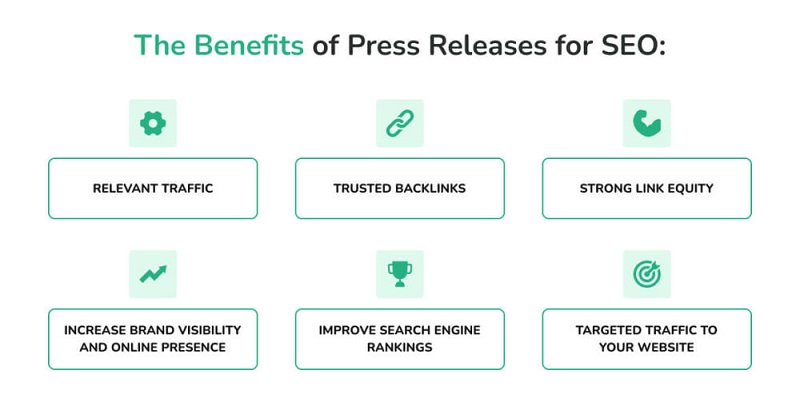
- Improve SEO
In addition to reaching media outlets and potential customers, search engines pick up press releases, similar to link building outreach. Using relevant keywords and linking back to your website can improve your SEO ranking and drive more traffic to your site.
- Establish authority
By consistently writing and distributing press releases, you establish yourself or your organization as an authority in your industry or field. This leads to gaining trust with your audience and further enhances your credibility.
- Create new opportunities
The more press releases you distribute, the higher opportunities you gain for media interviews, speaking engagements, or partnerships that rarely receive from other strategies.
How To Write A Press Release In 7 Steps
As a future-proof digital agency with experience in partnering with media partnerships, ROI Digitally concluded that learning how to write a good press release is not hard, only if you know the right process. Let’s reveal them:
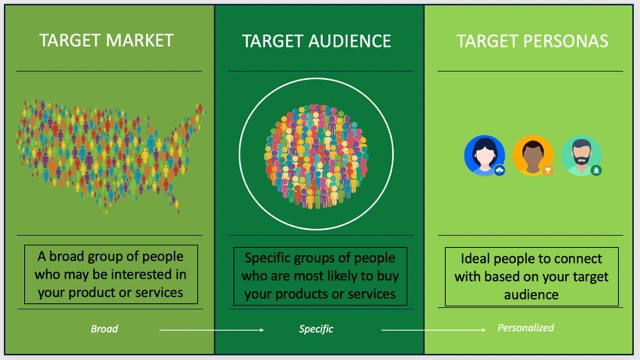
Step 1: Identify Your Target Audience
Knowing who and where you want your press release to reach allows you to customize your information to the right audiences. Moreover, increases your chances of being a good fit for media or journalists. Before starting to write, ask yourself these questions:
- Who is this story about?
- What is happening?
- Where is it going on?
- What are the keywords and main points?
- When will it occur?
- Which of the brand messages do you want to deliver?
- Why is it a good fit?
- How can audiences gain knowledge from your press release?
Step 2: Develop a Catchy Headline
Remember this: The first thing readers see on your press release is the HEADLINE.
Needless to say, it is the very first impression your audiences have about your press release.
Hence, learning how to write a press release statement should start with developing an engaging and persuasive headline. Here is how:
- The headline should tell the story. It needs to summarize the main point of your press release clearly and concisely. Consider the headlines you see in newspapers or online articles and aim to create something similar.
- The headline should be impactful. This is your chance to catch the reader’s attention and entice them to read further. To achieve this, use action verbs that offer a sense of excitement or urgency.
- The headline should be direct. Avoid using complex words. Instead, aim for simple language that anyone can understand. Your headline should indicate what the press release is about without misleading the reader.

Step 3: Write a Strong Lead Paragraph
The lead paragraph should summarize the most important information in your press release. It should contain short statements about your news’s who, what, where, when, and why. This will give journalists a quick overview of your story and encourage them to keep reading.
For the press release format, you can see this first paragraph, usually consisting of 35 to 45 words, summarizes the most critical points of your press release.
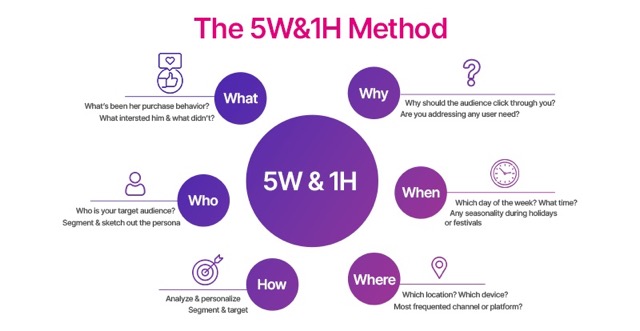
To write a compelling lead, remember to answer the “5 Ws” – Who, What, When, Where, and Why.
- Who: Highlight who is involved in the news story. This could be an individual, a group, or a company.
- What: Explain what the news is about. Be clear and precise about the event, product launch, partnership, or any other news you are announcing.
- When: Specify when this event or story happened or when it will happen. If it’s a future event, include the date and time.
- Where: Indicate where the event took place or will take place. It could be a physical or virtual location if the event is online.
- Why: Explain why this information is relevant to the reader or newsworthy. This is your chance to convince the reader that your news matters.
Step 4: Include Supporting Details
After the lead paragraph, you can expand on your news by providing more details and relevant information. The purpose of supporting details is to provide depth to your story and to substantiate the claims made in your headline and lead paragraph. Remember to keep your writing concise and avoid overstuffing that leads to opposite effects.
In the process of how to write a good press release, your supporting details should follow the lead paragraph and elaborate on the “5 Ws” (Who, What, When, Where, and Why). Here are some ways to creatively include them.
- Quotes: Include a quote from a key person in your organization related to the news. This could be the CEO, a project lead, or anyone closely associated with the news item. Quotes add a human element to the story and provide personal insights or opinions that can’t be conveyed through factual reporting alone.
- Facts and Figures: If your press release is about a new product, include specifications, pricing, and availability. Provide some historical data for context if it’s about a company milestone.

- Background Information: Provide some background information about your company or the topic. This helps to set the context for those who may not be familiar with your organization or industry.
- Visuals: Include relevant images, video marketing, or infographics to support your context if possible. Visuals can make your press release more engaging than the text itself.
Step 5: Include Multimedia Elements
Adding multimedia elements engages your readers in the story. In case you wonder how to include appropriately, here are some tactics to follow:
- Relevant Multimedia: Choose images, videos, or graphics directly related to your news. This could be product photos, event images, company logos, infographics that break down complex data, or video interviews with key personnel.
- High-Quality Media: Ensure that these elements are high-resolution and professional-quality. Blurry or poorly-produced visuals can detract from your message and harm your brand image.
- Captions and Credits: Include a compelling caption for each visual element to explain what it represents. If people are pictured, provide their full names and titles. If the image or video was created by someone else, ensure you have the right to use it and provide appropriate credits.
- Follow Distribution Service Guidelines: Most press release distribution services have specific requirements regarding the number and size of multimedia elements. Strictly follow these guidelines for easier acceptance and distribution.
- Media Contact Information: Lastly, don’t forget to include your media contact information. Reporters may want to reach out for further information or clarification, so provide an email address and phone number where they can reach you.

Step 6: Provide a Newsworthy Angle
A newsworthy angle is what you need to pay attention to the most in the process of how to write a press release.
We can confidently tell that this method ensures your press release gets the attention it deserves. But it can be quite complex. So, here is a simple explanation of how to do it.
News outlets exist primarily to report news, not to advertise products or services. Therefore, your press release should be framed around something timely, significant, and relevant to the industry.
When assessing the newsworthiness of your press release, ask yourself:
- Is it timely?
- Is it important to your industry or target audience?
- Is it useful or unique?
- Is it aligned with your target audiences’ interests?
- Does it tell a story rather than just making a statement?
Observing other news stories and identifying their hooks to understand what makes a story newsworthy. This practice can help you frame your own stories more appealingly. Remember, your press release should cater to journalists’ interests. Offering them exclusive data or research, or tying your news to a trending topic (a process known as ‘newsjacking’), can make your press release more appealing.
Notice this: Create an emotional connection with your story that is deeply relatable to your audience, leading to greater engagement and social traction. People who feel emotionally connected to your brand are likelier to engage with it.
Step 7: Use Boilerplate Text In Summary
Using boilerplate text to summarize your press release is an effective strategy for several reasons.
- It promotes efficiency. Having a pre-prepared, succinct summary of your business saves you the effort of rewriting this information for every press release.
- It ensures consistency in how your business is presented. This is critical for maintaining a coherent brand image across all your public relations materials.
- It provides essential context about your company to new readers, helping them better understand the press release’s content.
- It enhances your company’s credibility by showing that your business is established and serious, which can influence how the press and public perceive your news.
- It serves as an SEO tool if it includes relevant keywords, potentially increasing your online visibility.
*Notice: Keep your boilerplate text up-to-date to ensure that it accurately represents your company in its current state.
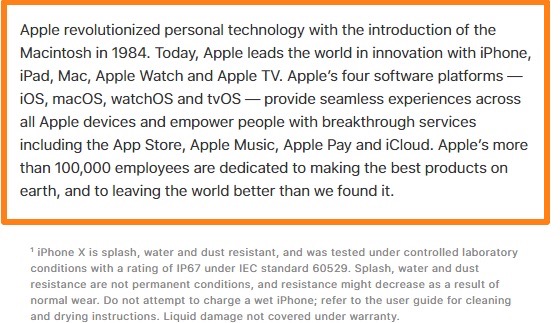
Example: “ROI Digitally is a leading digital marketing agency based in Ann Arbor, Michigan. Dedicated to helping businesses future-proof themselves against economic crises, ROI Digitally views digital marketing as essential business insurance.
We aim to strengthen your business through professional digital marketing strategies and optimize your return on investment. Our mission is to deliver innovative solutions that allow businesses to reach wider audiences, measure their marketing efforts, and adjust their strategies based on data-driven insights.”
Read more: What Is Link Building?
7 Tips To Write A Press Release
- Keep it concise and to the point, ideally one page in length.
- Use active voice and avoid industry jargon.
- Include relevant quotes from key stakeholders or experts.
- Utilize multimedia elements such as images or videos to make your press release more engaging.
- Edit and proofread thoroughly before distributing it.
- Personalize your pitches when sending out the press release to journalists.
- Consider using a distribution service to reach a wider audience.
Frequently Asked Questions
What are the examples of press release?
When Apple launched its iPhone 12, the company issued a press release detailing its new features, pricing, and availability. The release started with a compelling headline that briefly delivered the main news – “Apple introduces iPhone 12 with 5G technology.”
What are the 7 steps to a press release?
Here are the steps commonly mentioned in writing a press release:
- Step 1: Identify Your Target Audience
- Step 2: Develop a Catchy Headline
- Step 3: Write a Strong Lead Paragraph
- Step 4: Include Supporting Details
- Step 5: Include Multimedia Elements
- Step 6: Provide a Newsworthy Angle
- Step 7: Use Boilerplate Text In Summary
Conclusion
In conclusion, knowing how to write a press release is valuable for anyone in public relations or communications. This step-by-step guide has provided expert insight into crafting a compelling and newsworthy press release.
Remember, the final goal is to make it as easy as possible for journalists to use your material and spread your message.