
Ever wondered how your competitors’ marketing strategy perform so outstanding?
Uncover the ‘secrets’ behind their successful campaigns with advanced competitor analysis tools, providing in-depth competitor analysis from backlinks, rankings, traffic, keywords, etc.
Let ROI Digtially’s expert reveal these top platforms in this article!

What Should You Look for in Competitor Analysis Tools?
When selecting competitor analysis tools, consider competitor analysis software features that will provide you with this information’s data, insights, and practical applications. More specifically, the tool must offer:
- Comprehensive Data Gathering: Collect data from various sources, including SEO metrics, social media presence, content strategy effectiveness, and user experience aspects of competitor websites.
- SEO Insights: Analyze competitors’ search engine optimization efforts, track keyword rankings, and understand backlink profiles, allowing you to find gaps in your SEO strategy and identify opportunities for improvement.
- Social Media Monitoring: Monitor your competitors’ social media activities to check their engagement strategies, campaign performance, and audience interaction.
- User Experience Analysis: Website user experience (UX) directly impacts customer retention and conversion rates. Tools that evaluate UX elements, such as site speed, navigation, and design elements, can provide valuable insights.
- Keyword Research and Tracking: Keywords are at the heart of content marketing and SEO. Quality tools offer sufficient keyword research capabilities and track competitors’ rankings for those keywords.
Learn more: What Is SERP Volatility and How To Deal With It
3 Competitor Analysis Tools for Social Media
Knowing how your competitors engage with their audience and understanding their strategies on social media is a good reference for a successful social media campaign. Here are tools to check out:
Social Blade
→ Pricing: Starts from $3.99/month
Imagine you’re in a race with your friends to see who can get the most followers on Instagram.
Social Blade shows you a scoreboard of who’s getting more likes, posting more often, and whose followers are zooming up.
It is a web-based analytics tool that offers in-depth tracking and analysis of social media profiles across multiple platforms, including YouTube, Instagram, Twitch, and X.

Social Blade’s key features include:
- Social Media Content Analysis: Examine which pieces of content perform best on social media platforms such as Facebook, X, LinkedIn, and Pinterest.
- Content Comparison: Compare your social media content performance against your competitors to identify strengths and areas for improvement.
- Engagement Metrics: Track likes, shares, comments, and overall engagement rates to understand what type of content drives interaction.
- Viral Content Alerts: Receive notifications when a competitor’s content starts gaining traction or goes viral, allowing for timely insights into content trends.
Learn more: 7+ Best Social Media Scheduling Tools
Phlanx
→ Pricing: Starts from $39/month
Phlanx facilitates comparison across various social media channels, allowing businesses to see where their competitors are most active and garnering attention. The platform’s user-friendly interface simplifies the process of tracking competitor activity, saving time and resources that might otherwise be spent on manual analysis.

Phlanx’s key features include:
- Engagement Analysis: Calculate and compare the engagement rates of competitors’ posts to gauge audience interaction levels.
- Follower Growth Tracking: Monitor and benchmark the speed at which competitors gain or lose followers over time.
- Content Performance Metrics: Evaluate which types of content are performing best for competitors based on likes, shares, and comments.
- Influencer Collaboration Insights: Identify and analyze the influencers and content creators partnering with competitors.
- Historical Data Access: Explore past social media performance trends to understand long-term competitor strategies.
Buffer
→ Pricing: Free Plan available with limited access.
Buffer lets businesses see how often and when their competitors post, which can give clues about their social media plans and how well they’re working. This competitor analysis software also shows how much people like, comment on, and share these posts, helping companies understand what types of content are popular with competitors’ followers.
Additionally, Buffer makes it easy to compare your social media performance with your competitors, helping you see who’s doing better in getting attention and engaging with their audience.
You can also watch competitors’ followers grow over time, which can give insights into attracting more people and offer ideas on improving your strategies for growing your audience.
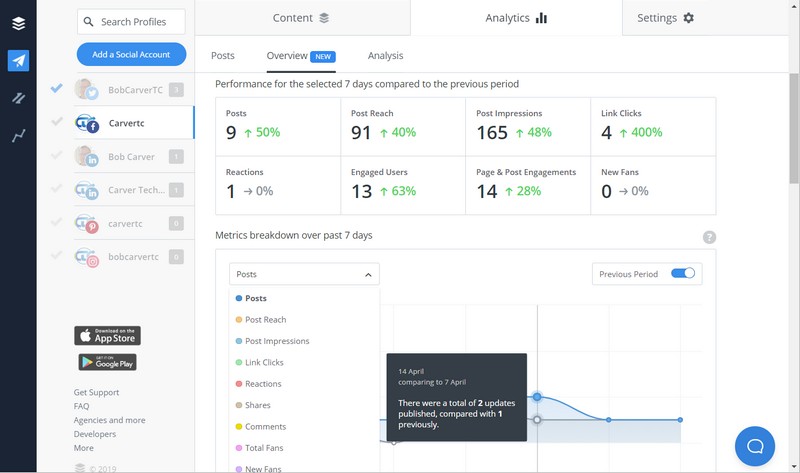
Buffer’s key features include:
- Post Scheduling Analysis: Insights into competitors’ post timings for optimized content planning.
- Engagement Metrics: Overview of likes, comments, and shares for competitor content.
- Content Strategy Evaluation: Ability to compare which content forms are most successful for competitors.
- Follower Growth Trends: Tracking of competitors’ follower increase or decline over time.
- Benchmarking Capabilities: Comparison of your social media performance with that of competitors.
3 Competitor Analysis Tools for Content
Watching what your competitors post and how their audience engages with the content keeps you in the loop. Here are three tools that can help you see what your competitors are up to and improve your content plans:
Hootsuite
→ Pricing: Starts from $99/month (30-day Free Trial)
Hootsuite makes it easy to see social media posts your competitors share, click-throughs, and post reads.
The ability to overlook helps you understand how your target audience engages with different content and identify which sparks conversations the most. By looking at what’s working for them, you can make similar content to attract more interaction or get inspired to create something unique to stand out.
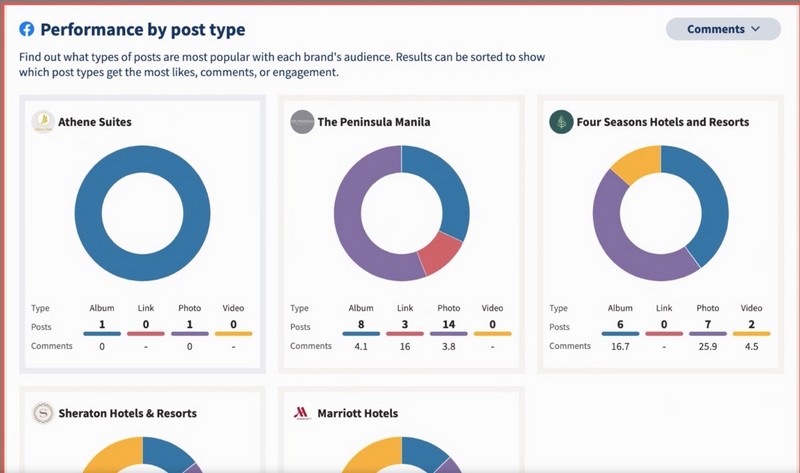
Key features of Hootsuite for content analysis:
- Competitor Content Tracking: Monitor and analyze competitors’ published content.
- Engagement Metrics: Access data on likes, comments, shares, and overall engagement.
- Content Reach Analysis: Understand the extent of competitors’ content reach.
- Trend Discovery: Identify trending topics and hashtags in competitor content.
- Performance Benchmarking: Compare your social media content performance against competitors.
Learn more: Competitors Backlinks: How To Thoroughly Analyze Them?
BuzzSumo
→ Pricing: Starts from $199/month (30-day Free Trial)
BuzzSumo is like a spy tool that lets you peek at what content your competitors focus on that people love and share on social media. It shows you the popular topics, how they deliver their messages (through articles or videos), and the catchy headlines they use. You also get to see how often they post, so you can adjust your schedule to keep up or stand out.

Key features of BuzzSumo for competitor content analysis:
- Content Discovery: Uncover the most shared content in any given topic area.
- Share Count Tracking: Find out how often a piece of content has been shared across social platforms.
- Content Analysis Reports: Get comprehensive reports on what content performs best for any topic or competitor.
- Influencer Analysis: Identify who is sharing and promoting content.
- Backlink Data: See who is linking to your competitor’s content.
- Question Analyzer: Understand popular questions your target audience asks within your industry.
Market Muse
→ Pricing: Free Plan available with limited access
MarketMuse acts like a content detective, using AI to analyze the performance of competitors’ marketing content.
You feed the competitor analysis software your rival’s content, and its technology breaks down how detailed and on-point that content is. It’s like getting a sneak peek at their report card, showing how well they understand their topics and how visible they are on search engines.
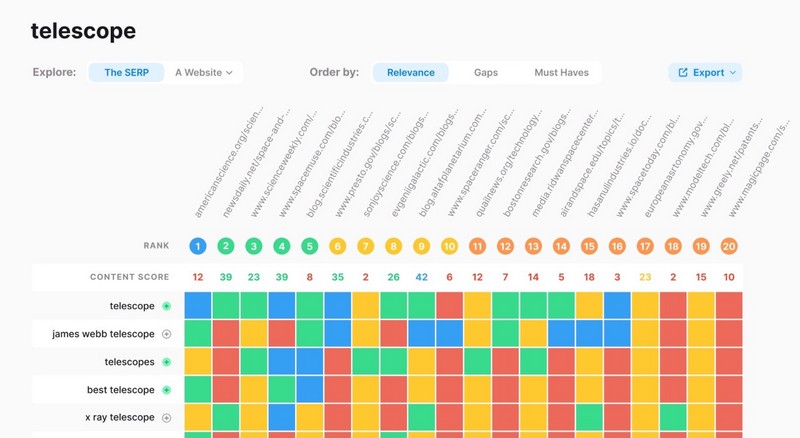
Key features of MarketMuse for competitor content analysis
- Content Scoring: Rates the quality and relevancy of content based on topic coverage.
- Competitive Analysis: Compares your content with that of your competitors to find gaps.
- Keyword Analysis and Recommendations: Identifies primary and secondary keywords used by competitors.
- Content Briefs: Generates detailed briefs for creating or improving content with SEO best practices.
- Topic Authority: Evaluates how authoritative a piece of content is within its subject area.
- Content Optimization: Offers suggestions to enhance existing content for better performance.
Learn more: Everything You Need To Know About Pillar Content
3 Competitor Analysis Tools for SEO
Three SEO competitor analysis tools are like secret maps showing where your competitors find ‘treasure’ online. It’s time to get your turn ahead of the game with these competitive research tools:
Ahrefs
→ Pricing: Starts from $99/month
Ahrefs allows you to ‘spy’ on your competitors’ SEO tricks by looking closely at who links to their sites and what keywords they use to attract visitors.
With its huge database, you can check the strength of these links and guess how well your competitors might rank on search engines. It also shows the specific words that bring people to your competitors’ sites.
Knowing these keywords, you can adjust your SEO strategy by focusing on areas they’ve missed or improving your game on the hot topics to make your site more visible online.

Key features of Ahrefs for SEO analysis:
- Site Explorer: Offers an analysis of competitor backlink profiles and organic search traffic.
- Keywords Explorer: Provides search volumes and keyword difficulty scores.
- Content Explorer: Finds popular content within a niche and analyzes its performance.
- Rank Tracker: Monitors search rankings for you and your competitors.
- Domain Comparison: Compares multiple competitors’ domains for various SEO metrics.
- Backlink and Referring Domains Reports: Displays detailed backlink data for any website.
Learn more: Ahrefs Vs Majestic: How To Choose The Right Tool For SEO Strategies
SEMrush
→ Pricing: Starts from $129.95/month
SEMrush helps you see what your competitors are doing specifically in their SEO campaigns and ads. It shows the keywords they rank for and how high they appear in search results. This lets you pick better keywords to boost your own site’s ranking.
You also see your competitors’ ad budgets and which ones work best. This way, you can make smarter choices for your pay-per-click ads, focusing on keywords and ads that bring results for businesses like yours.
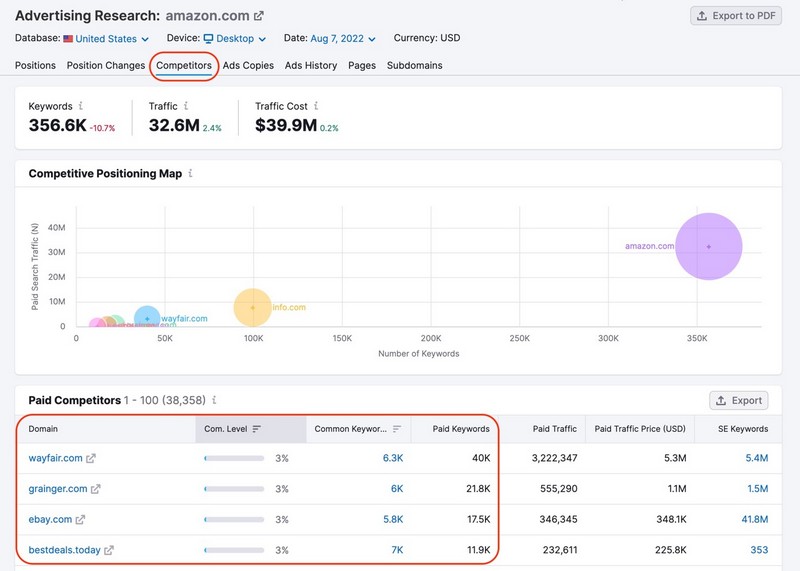
Key features of SEMrush for SEO analysis:
- Organic Research: Analyzes competitors’ search rankings and organic traffic.
- Keyword Gap Analysis: Identifies keyword opportunities by comparing your keyword profile with competitors.
- Backlink Analysis: Examines the strength and origin of competitors’ backlink profiles.
- Traffic Analytics: Estimates competitors’ web traffic volumes and sources.
- Position Tracking: Monitors daily changes in keyword rankings.
- Site Audit: Offers insights into SEO issues on your website for optimization.
Learn more: 5+ Best Small Business SEO Service
Moz
→ Pricing: Starts from $99/month
MOZ gives you special tools to check your competitors’ SEO performance. It shows you how strong their websites are (domain authority) and who is linking back to them (backlink profiles), helping you understand why they might rank better in search results.
You can also see which keywords are working best for them, which can help you improve your own content. With MOZ, you can spot where you’re falling behind and find ways to beat your competitors in search rankings.
Plus, you can watch your keyword rankings performance over time, helping you adjust your strategy to stay on top.

Key features of MOZ for SEO analysis:
- Keyword Explorer: Research keywords and uncover how competitors rank for them.
- Rank Tracker: Monitor search engine rankings for you and your competitors.
- Link Explorer: Examine the backlink profile and domain authority of any website.
- On-Page Grader: Analyze on-page optimization and compare it with competitors’ pages.
- MozBar: A Chrome extension providing instant metrics on any webpage or SERP.
- Site Crawl: Detect issues on your website that could impact your SEO performance.
2 AI-Powered Competitor Analysis Tools
AI-powered competitor analysis tools leverage advanced machine learning algorithms to provide insights into your competitors’ strategies, market positioning, and performance. Here are three such tools:
SE Ranking
→ Pricing: Starts from $44/month
SE Ranking uses smart AI to help you see what your competitors are up to. Imagine it like a detective who keeps an eye on how well your rivals are doing in the search engine race.
It tells you which words people are typing into Google to find your competitors’ websites and gives you clues on how they’re making their content so catchy. This helps you come up with smarter ideas to make your website shine.
Think of SE Ranking as your lookout, too.
It watches for any big moves your competitors make—like if they suddenly become more popular or change how they attract visitors. Knowing this quickly lets you tweak your game plan to stay one step ahead, keeping your website at the top of the search results.

Key features of SE Ranking for AI-powered analysis:
- Competitor Research: Gain insight into your competitors’ search rankings, traffic, and marketing strategies.
- Keyword Rank Tracker: Monitor keyword positions for any domain daily.
- Website Auditing: Analyze your website for SEO issues and compare it with competitors.
- Backlink Checker: Explore the backlink profiles of your competitors.
- On-Page SEO Checker: Receive recommendations for optimizing your web pages based on competitors’ data.
- Marketing Plan: Get a comprehensive SEO checklist tailored to your website, including competitor strategies.
Learn more: What Is AEO (Answer Engine Optimization)? The SEO’s Guide to AEO
SimilarWeb
→ Pricing: Starts from $44/month
SimilarWeb is like a high-tech competitor analysis software that uses AI to check how well your competitors are doing online. It looks at where their website visitors come from, what they do on the site, and how much they engage with the content.
This lets you compare your online performance to others in your field, giving you a clear idea of your competition.
It is highly suggested that you figure out what your audiences like and don’t like, helping you to create marketing campaigns that attract the right crowd. Just like knowing exactly what bait to use to catch the fish you want, putting you one step ahead in the competition.

Key features of SimilarWeb for AI-powered analysis:
- Traffic Analysis: Examine traffic volumes, sources, and user engagement metrics.
- Industry Benchmarking: Compare your performance against industry averages.
- Geographic Distribution: Understand the geographic spread of competitors’ traffic.
- Audience Insights: Gain insights into audience demographics and interests.
- Keyword Analysis: Research organic and paid keywords driving traffic to competitors.
- Mobile App Analysis: Get data on mobile app engagement and user retention.
- Market Analysis: Identify emerging trends and new market entrants.
Conclusion
While each tool has unique strengths and specializations, these competitor analysis tools collectively empower marketers with actionable intelligence crucial for staying ahead in the highly competitive online market.
Investing in such tools can lead to smarter decisions, better allocation of marketing resources, and, ultimately, a stronger market position.
As digital marketing continues to evolve, these competitor research tools will be invaluable for businesses that aim to compete and lead in their industry.