
Keywords are crucial to any content strategy, but what determines a good keyword? One factor to consider is search volume; that’s why this blog will show you how to find keyword search volume. Before discovering the detailed step-by-step, let’s start with the basics.
What Is Keyword Search Volume?
Keyword search volume is a measure that SEO and PPC tools use to show how often users search for a specific keyword each month. It helps marketers choose popular and less competitive terms, guiding them to attract more interest and traffic.
For example, the search volume of the keyword “wireless mouse” is 52K, and based on this, you know whether customers care about this product.

Search volume is crucial for SEO and PPC strategies – the basis for keyword research and traffic predictions. Looking at monthly searches helps you plan when and how to focus on these keywords. Also, analyzing search volume trends over the year provides insights into a keyword’s popularity over time.
In our last share, we talked about how keyword search volume is calculated. Now, let’s reveal factors affecting keyword search volume.
- Seasonality: Some words are searched more during specific times. For example, “beach vacation” gets more searches in summer, and “holiday recipes” are popular during festive seasons.
- Trends: Popular topics influence keyword searches. Words related to trending subjects or viral content see more searches. Therefore, keeping up with these trends will help make your content more relevant.
- Geography: Keywords can be more prevalent in certain areas. Local events or businesses have words that get more searches in their specific locations, so it’s crucial for local online strategies.
- Industry: Different types of businesses have unique search patterns. For example, tech words are usually often searched, while other industries might have changes based on specific events. Knowing these patterns helps target the right keywords effectively.
- Specificity: More general terms like “weight loss” tend to have a higher search volume of 133k compared to more specific phrases like “healthy meals for weight loss,” which has a search volume of 10k.
Recognizing these factors enables you to make informed decisions when choosing keywords tailored to specific contexts.
What Is A Good Search Volume For A Keyword?
A good keyword search volume can range from 100 searches per month to millions, depending on your business, digital marketing goals, and industry. Consider the following tips:
- Keyword search volume varies widely by industry.
- Ideally, aim for keywords with high search volume and reasonable difficulty.
- Targeting keywords with low search volume may lead to poor visibility.
- Focusing only on extremely high-volume keywords can result in tough competition.
- For sites with moderate traffic, you should avoid keywords with very high search volumes (100,000 to 1 million).
Most websites should target a balanced mix of low- and medium-volume keywords based on their unique needs and niche.
Seasonal and evergreen keywords
To determine whether a search volume is good, you must distinguish between seasonal and evergreen keywords. They are two search terms based on their search patterns and relevance over time. Look at this table to see how they compare:
| Seasonal Keywords | Evergreen Keywords | |
| Definition | Seasonal keywords are search terms that have changes in search volume on specific seasons, events, or holidays. | Evergreen keywords are search terms that stay relevant and have a relatively stable search volume throughout the year. |
| Examples | “Father’s Day gift ideas” “Christmas gifts” “Thanksgiving barbecue recipes” | “how do I change my oil””how much does a haircut cost””weight loss plan” |
| Search Volume | Seasonal keywords often have a rise in search volume leading up to the relevant season or event and a decline afterward. | These keywords have a steady search volume for a long time, providing a reliable traffic source. |
| Uses | Marketers use these keywords to align their content, products, or services with specific events or times of the year. Optimizing for seasonal trends can increase visibility and traffic during peak periods. | These keywords are the foundation for maintaining consistent traffic to a website. They provide a stable organic search traffic source and are crucial for gaining visibility throughout the year. |
| Strategy | Plan and optimize content, products, or promotions around specific seasons or events. That involves creating seasonal landing pages, running special promotions, or creating content tailored to the seasonal theme. | Focus on creating high-quality, evergreen content that addresses perennial interests or needs. This process ensures a steady traffic flow and helps boost authority in specific subject areas. |
Balancing the use of seasonal and evergreen keywords is an effective SEO strategy. It is a well-rounded approach to content optimization and audience engagement. Consider potential seasonal changes when evaluating keyword search volume.
3 Factors To Consider When Choosing Keywords
When choosing keywords, in addition to search volume, you must consider two other crucial aspects:
- Keyword difficulty: Assess whether your website can compete for the keyword or if it’s too competitive for your site’s size.
- Keyword relevance: Ensure the keyword aligns with your website’s content and the type of material you intend to publish. A detailed SERP analysis can help you in this process.
Think of these three aspects—search volume, keyword difficulty, and relevance—as the three legs of a tripod. Each is equally vital, and a failure in any of them could cause the tripod to collapse. Therefore, you must combine search volume with other factors to find the most suitable keywords and build an effective on-page SEO strategy.
How to Find Keyword Search Volume?
There are countless tools to help you find keyword search volumes, such as Ahrefs, SEMrush, and Google Keyword Planner. Each has unique features, enabling you to analyze keyword data and make informed decisions for your site.
If you are a SEMrush user, this toolkit is all you need to find keyword search volume:
- The Keyword Overview tool gives a quick view of the keyword’s search volume globally and regionally. Keyword Magic has a specific column showing search volume.
- Organic Research displays keywords sending the most traffic to competitors’ sites along with their monthly search volumes.
- The Keyword Gap tool identifies gaps in your keyword strategy. It shows keywords your competitors rank for, but you don’t, along with monthly search volumes.

The best thing is that SEMrush updates search volumes monthly and tells you about recent changes. Also, this tool uses historical data, allowing you to research average search volumes dating back to January 2012.
How Do You Find Keywords?
When finding and choosing keywords, you must also find out the search intent to rank well for a keyword. What do users want to see when they type this phrase into a search engine? Then, give those users what they are looking for with your content.
If you want to deliver value to your audience, here are some of the best keyword research tools to consider:
Google Trend
Google Trends is a Google tool that reveals how popular a keyword is over time. Enter your keyword, and you’ll see a chart showing interest trends.
For example, here is the result for a search for “firework” on Google Trends:

You can explore where the keyword is popular by adjusting the geographic settings. Also, the tool allows you to change the timeframe for analysis. Scroll down the page; you’ll find related topics and queries, giving additional keyword ideas and insights to enhance your content or marketing strategy.
The best thing about Google Trend is that it is free. That means you will get search interest over time, related queries, rising searches, and demographic data without charging any fee.
Google Keyword Planner
Google Keyword Planner is also a free tool that offers valuable insights into keyword research. Follow these steps to use it:
1. Open the tool and click “Go to Keyword Planner.”
2. Click “Tools” and select “Switch to expert mode.”
3. Then, on the main menu page, find the link to Keyword Planner.
4. You’ll have two options: “Discover new keywords” and “Get search volume and forecasts.”

Choose “Discover new keywords” to find keywords and enter specific keywords or your website URL. For instance, if you enter your business website, Google will suggest keywords with average monthly searches (search volume) and competition levels.
Look at this example: the keyword “Netherlands McDonald’s menu” has an average of 100 to 1,000 monthly searches, with “low” competition, according to Keyword Planner.

Note that the competition here refers to advertisers bidding on the keyword for paid ads, not organic (non-paid) competition in search engine results.
While Google Keyword Planner is helpful for SEO and PPC keyword discovery, it has limitations. It doesn’t provide exact search volume, keyword difficulty, or insights into search intent. So, combine different resources to ensure a more thorough approach to optimizing content and ad campaigns.
Google Search Console
The following keyword research tool you should use is Google Search Console. This free tool tracks your website’s organic Google traffic performance, allowing you to find new keywords and get data on your ranking.

To start, visit the Google Search Console page and click the “Start now” button. Then, enter your domain and go through the verification process using DNS verification, uploading an HTML file, adding an HTML tag, or utilizing your Google Analytics or Google Tag Manager account.
Once verified, you’ll access the dashboard. To find new keywords:
Step 1: Navigate to the “Performance” report and click “Search results.”
Step 2: In the “Queries” list, sort them by clicking “Impressions” to see high to low impressions.
Step 3: Find keywords with high impressions but few or no clicks. These indicate keywords you may rank for but aren’t actively targeting.
Consider creating new content or optimizing an existing, relevant page for those keywords to improve their performance.
SEMush Keyword Magic Tool
Another effective tool is SEMrush’s Keyword Magic Tool. It has the most accurate search volume metric of any tool on the market, with a database of more than 24 billion keywords. You can use it to identify and analyze keywords to create successful SEO and PPC campaigns and attract more traffic to your site.
To use the tool, just visit and type a “seed” keyword related to your industry or topic and click “Search.” The tool will then search and show the most relevant ones to your query. You’ll get all the information you need, including:
- Suggested keywords
- Search volume
- Search intent
- Competitive density
- Trends
- Keyword Difficulty (KD)
- Cost-per-click (CPC) fees
- SERPs
- Number of URLs that appeared in organic search results for that keyword

SEMrush offers three subscription plans to meet the needs of different businesses:
- The Pro plan for freelancers and startups is $119.95 per month.
- The Guru plan for small- to midsize businesses is $229.95 monthly.
- The Business plan for larger companies is $449.95 monthly.
Users can also select between a monthly or annual plan. The annual option will save you 16% compared to a monthly one. If you’re unsure which account is best for you, create a free account and get up to 10 free searches daily.
Keyword Sheeter
Keyword Sheeter is a free keyword tool with a different approach. It stands out because its data comes from hundreds of Google autocomplete suggestions.
To get started, enter the keywords (one per line) and click “Sheet keywords.” You’ll then get a list of ideas. Here’s an example:
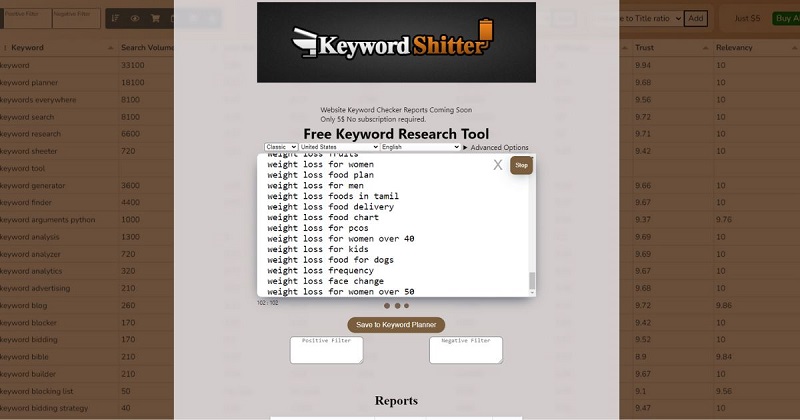
You can easily save the data by clicking the “Save to Keyword Planner” button at the bottom of the screen (if you have a subscription). Otherwise, copy-paste the keywords into another tool and start analyzing.
For those who want more comprehensive information, pay for a report. There are different report options are available, including:
- “Search Volume CPC Bids”
- “Term Explorer Difficulty Report”
- “Top 100 Serps”
- And more.
For those who want expert assistance in searching keywords or your SEO strategy, don’t hesitate to contact us – ROI Digitally. We’re here to support your online success.
How to Find Local Search Volume?
Now that we’ve explored how to find keyword search volume, let’s explore further: how to find search volumes locally. You can use SEMrush’s Position Tracking and PPC Keyword tools or choose the free Google Ads Keyword Planner. Below, we guide you step-by-step on using each tool to determine local search volume.
Google Ads Keyword Planner
Unlike many keyword tools that only offer national data, Google Ads Keyword Planner lets you customize your location and get search volumes for certain states or cities. This feature is handy for fine-tuning local SEO strategies.
Here is how to find local search volume for keywords using Google Ads Keyword Planner:
Step 1: Go to “Tools and Settings” at the top right of your screen in your Google Ads account. Choose “Keyword Planner” from the drop-down menu.
Step 2: Enter keywords and tap the current location (e.g., “United States”).
Step 3: Choose the specific city you want to target to view search volume compared to other locations.

Step 4: Save your settings and click “Get Results” to see the average monthly local searches for that specific location.
SEMrush Position Tracking
Many might have heard about SEMrush Position Tracking, an excellent marketing tool. When setting up your ad campaign with it, you can focus on local keyword volume by following these steps:
Step 1: Type in the ZIP code or specific location to start tracking on a national, regional, or local level.
Step 2: To isolate keywords locally, enter the target city and ensure the drop-down indicates “local.”
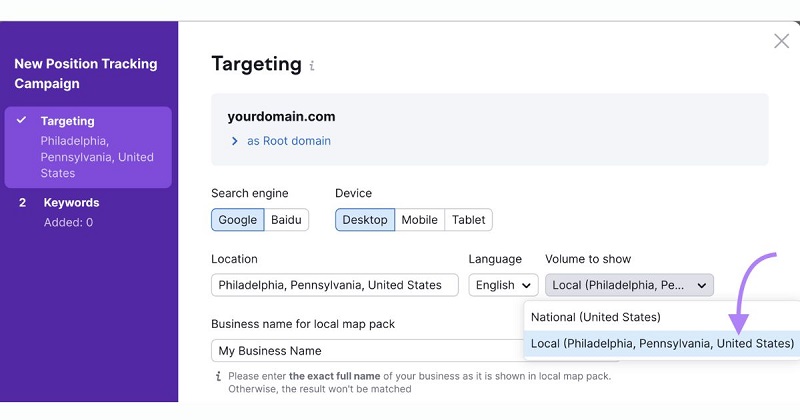
Step 3: After choosing your location, input a list of keywords you currently rank for or aim to rank.
Step 4: Get the search volume for these keywords on a local level and use them in your content.
SEMrush PPC Keyword Tool
SEMrush’s PPC Keyword Tool is an excellent feature designed to help users optimize their Pay-Per-Click (PPC) advertising campaigns. The tool provides three ways to add keywords:
1. Manual entry
2. Direct import from SEMrush
3. Importing from a CSV, XLSX, or TXT file
Once you select a source, proceed to the next step to confirm the keywords and specify the location by city. After completing the setup, you’ll have access to the entered keywords along with their local search volume metrics.
How Do You Use Keyword Search Volume For SEO?
Knowing how to find keyword search volume is critical to ranking high on search engines. Yet, relying only on this metric is not enough for an effective content strategy due to factors like PPC ads and inaccurate data. Use these tips for a better approach:
- Diversify Metrics for Traffic Projections: Traffic projections can be affected by inaccuracies and other factors. So, consider using Ahrefs’ Traffic Potential metric in Keywords Explorer. It showcases the potential organic traffic based on the #1 ranking page’s overall keyword performance.
- Strategic Keyword Selection: Be cautious when choosing high search volume keywords without considering keyword difficulty. For the best results, you should first target keywords with lower search volumes and KD. As your site gains authority, gradually aim for more challenging keywords.
- Stay Informed with Trends: High search volume doesn’t guarantee current popularity. Regularly check for trends and shifts in keyword interest. Tools like Google Trends and Ahrefs’ Keywords Explorer can provide insights into seasonal changes in search volume, helping you adapt your content strategy accordingly.
Frequently Asked Questions
How much search volume is good for SEO?
There isn’t a one-size-fits-all answer to this question; it varies based on your goals and niche. Ensure to target keywords with 10-100 searches if they hold significant value for your business, even if they have a lower search volume.
Also, you should skip 10k+ volume keywords that aren’t relevant or are too challenging to reach top rank.
Should I target keywords with the highest search volume?
Not really.
As mentioned above, finding a balance between search volume and keyword difficulty is crucial since high-volume keywords typically have intense competition. This equilibrium is essential for optimizing your chances of achieving a higher ranking.
Why are search volumes different across SEO Tools?
Many keyword research tools, including the widely used Google Keyword Planner, often rely on similar data sources. However, more advanced tools like Ahrefs have distinct methods to enhance and refine the data, leading to variations in reported search volume.
Final Thoughts
Now that you understand how to find keyword search volume and use it effectively, you’re ready for your research. With the help of tools like Google Trends or Keyword Tool, your website has a better chance to rank high on search engines.
Remember, SEO is not a one-time task. Remember to revisit your keywords regularly as search engine algorithms evolve and SEO trends change. Keep tracking and updating to ensure optimal performance!