
Key Takeaways
- Pillar content helps boost your SEO by showing Google you’re an expert on a broad topic. It links to smaller articles (cluster content), making your site more organized and easier to navigate for both users and search engines.
- Creating high-quality, evergreen pillar content can attract backlinks, increase time on page, and reduce bounce rate. This gives your site long-term SEO value and helps improve your rankings.
- A strong pillar content strategy starts with knowing your audience, choosing the right topic, and building a solid internal linking structure. It’s not just about volume, it’s about offering depth, quality, and usefulness.
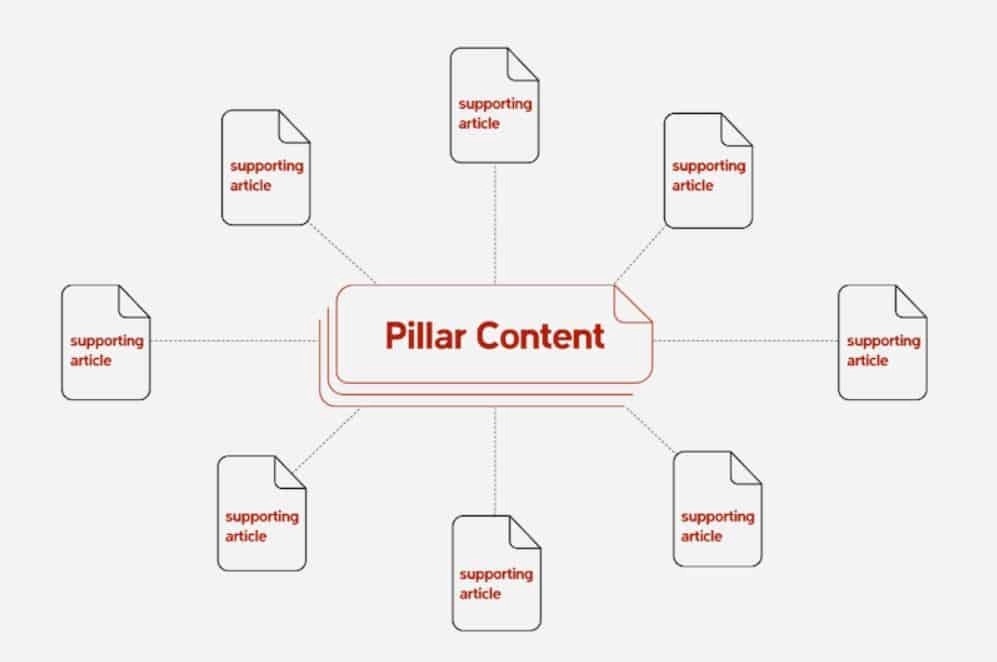
Content pillar. Source: EQVN
What Is A Content Pillar?
Pillar content (or content pillar) is a detailed, high-quality article or page that covers a broad topic in depth. It serves as the central hub for a specific subject on your website, internal linking out to smaller, related pages, also known as cluster content. This makes it easier for both users and search engines to explore your content.
Think of it like this: if your website is about dogs, your pillar content might be “The Complete Guide to Dog Breeds.” The main page would then link to related articles, such as “How to Train a Puppy” or “Best Dogs for Apartment Living.”
Pillar content is important because:
- It helps improve your site’s SEO by showing search engines that you’re an expert in your niche.
- It makes your site easier for visitors to navigate.
- It attracts links from other sites, helping boost your overall authority.
- It remains relevant over time (this is known as evergreen content), so it continues to drive traffic long after it is published.
A good pillar page is comprehensive, long-form, well-structured, keyword-focused, and regularly updated. It also includes a clear call-to-action and supports lead generation. It can be a blog or an article with supportive elements, such as videos or infographics, which sets the foundation for your topic authority and SEO success.

Example of a content pillar. Source: Flow Agency
Check ROI Digitally’s SEO outsourcing service, we help to boost traffic, elevate rankings, rely on 100% white hat SEO, and expert management.
Content Pillar vs Topic Cluster: What’s The Difference?
In simple terms, pillar content (or a content pillar) is your main, in-depth page that covers a broad topic. Topic clusters are smaller, related pieces of content that link to and support the main page.
Think of it like this:
- The pillar content is the “hub,” a comprehensive, in-depth article that provides a broad overview of a subject.
- The topic cluster pieces are the “spokes,” shorter, focused posts that explore subtopics in more detail and connect back to the pillar.
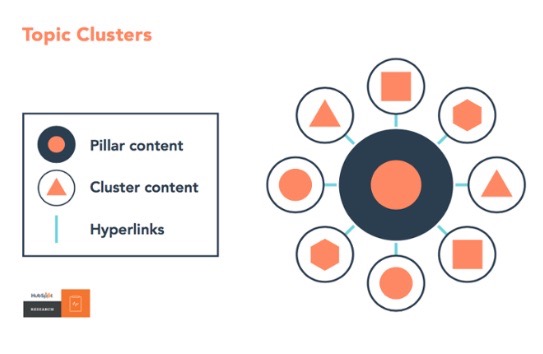
The relation between pillar content and cluster content. Source; HubSpot
For example:
Let’s say your content pillar is: “The Ultimate Guide to Outdoor Furniture.”
Then your topic cluster might include:
- “How to Choose the Right Patio Set”
- “Top Materials for Weather-Resistant Outdoor Furniture”
- “Best Outdoor Furniture for Small Spaces”
Each of these smaller articles links to the pillar page, and ideally, the pillar page links back to them, creating a strong internal linking structure that helps users navigate and enables Google to understand the depth of your content.
Pillar Content In SEO: Its Role & Benefits
A solid pillar content strategy is a major driver of SEO results. Here’s how:
Comprehensive Coverage of Broad Topics
Search engines like Google reward sites that show expertise and authority on a subject. A content pillar helps you demonstrate this by diving deep into a broad topic.
It’s not just a 500-word blog post but an in-depth guide that educates readers and answers multiple questions on the subject. When Google sees this level of coverage, it’s more likely to rank your content higher in search results.
Targeting Strategic Keywords
Your pillar content provides the space to naturally incorporate a range of important keywords related to your industry.
You can target both high-volume and long-tail keywords in a single piece. This helps your content appear in more searches and provides you with additional opportunities to attract the right audience.
Improving Internal Linking Structure
Pillar content is at the heart of a content cluster.
All your smaller, related SEO blog posts (cluster content) link back to your pillar content, and the pillar links to them. This internal linking strategy establishes a logical site structure that helps search engines comprehend the relationship between your content.
It also makes it easier for users to navigate your website, which improves SEO and user engagement.

The ideal internal linking structure. Source; seoClarity
Enhancing the User Experience
Because pillar content is thorough and well-organized, it answers your audience’s questions in one place.
Users can find what they need without jumping from site to site. This keeps them on your page longer, lowers your bounce rate, and improves engagement, which signals to Google uses to evaluate the quality of your site.
Attracting High-Quality Backlinks
High-value content pillars naturally earn backlinks because they’re useful resources.
Bloggers, journalists, and other websites are more likely to reference your in-depth guide in their own content. These backlinks enhance your domain authority and signal to Google that your content is credible and worthy of ranking.
Creating Long-Term SEO Value
Unlike trend-based content that fades over time, pillar content is typically evergreen. It stays relevant and useful for months or years after publishing. That means it can continue attracting traffic, leads, and links long after it’s first posted.
Regularly updating your pillar content can also keep it fresh and high-performing in the search results.
Winning Featured Snippets and SERP Features
If your pillar content is well-structured and clearly answers user questions, it’s more likely to be chosen for Google’s featured snippets or knowledge panels. These high-visibility placements can drive significant traffic to your site and help establish you as a trusted authority in your field.
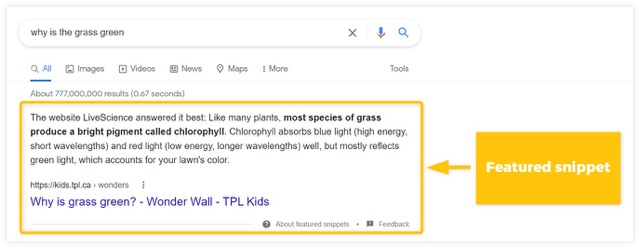
Pillar content supports a website to be shown on featured snippets if implemented properly. Source; Mangools
In short, with the right pillar content implementation, businesses will benefit from:
- Longer time spent on page: Because readers find all the info they need in one spot, they stay longer, boosting your site’s dwell time.
- Reduced bounce rate: If you meet users’ needs immediately with high-quality content, they won’t hit the back button. That tells Google your content is helpful.
- More backlinks and shares: Great content is referenced by other websites and widely shared on social media, which helps build your authority.
- Steady traffic over time: Since it’s evergreen, your pillar content keeps pulling in organic traffic long after it’s published.
- Better Google rankings: Google prefers trustworthy, well-linked, and in-depth content. A great pillar content strategy checks all those boxes.
- Improved site structure: Linking your cluster content to your content pillar makes your site more organized and easier for both users and search engines to explore.
Learn more: 5+ Best Small Business SEO Service
How To Create An Efficient Pillar Content
1. Understand Your Audience
Great pillar content begins with a clear picture of who you’re writing for. You need to know their struggles, goals, and questions. SEO experts recommend building detailed buyer personas, imaginary profiles of your ideal readers, and asking key questions like:
- What challenges do they face?
- Which sources do they trust?
- What tone and formats do they prefer?
Gather this information through surveys, interviews, focus groups, or sales insights. The goal is to choose topics that genuinely matter to your audience, so your pillar content feels relevant and engaging.
2. Choose the Right Content Format
Once you know your audience, decide what format will best serve them. Common formats for pillar content include:
- In-depth how-to guides
- Long reference posts
- List-based or statistics-driven pages
- Resource-worthy roundups
- Infographics, videos, or e-books
Select the format that aligns with both the complexity of your topic and your audience’s preferences.

Types of content marketing. Source; HubSpot
For example, a step-by-step guide might be best for a technical “how-to,” while an infographic could work well for sharing stats or timelines. You can also mix types, like embedding videos or visuals into a long-form post.
3. Create High-Quality, Evergreen Content
Your pillar content should be your best work, something that becomes the go-to resource on your chosen topic. To do this:
- Use storytelling and examples to make your content relatable.
- Dive deep into each section, adding stats, case studies, charts, or tools that boost the credibility of your information among readers.
- Edit and refine multiple drafts until each part adds real value.
Structure matters too: use headings, bullet points, and visuals that make it easy to scan and understand. Avoid general content, each sentence should serve the reader’s needs.
4. Optimize and Interlink Strategically
Smart formatting and linking boost both SEO and user experience. As you build your pillar content strategy:
- Use primary keywords in your title, headings, meta description, and URL.
- Include relevant secondary keywords to strengthen semantic relevance.
- Link from your pillar page to related cluster pages and back again. These interlinking signals indicate content depth and organization.
- Add links to trusted external sources for credibility.
A strong internal linking structure helps search engines understand your content’s hierarchy and boosts your overall topical authority.
5. Update and Maintain Your Content
Your work isn’t done once it’s published. A good pillar page remains relevant and accurate. Experts suggest:
- Reviewing performance metrics like bounce rates, dwell time, and conversions.
- Updating facts, statistics, and links as needed, especially in fast-moving fields.
- Refreshing older sections or adding new subtopics to keep the content valuable.
Check your pillar pages at least twice a year, or more often if the topic changes quickly. This ensures your content continues to help your audience and performs well in search.
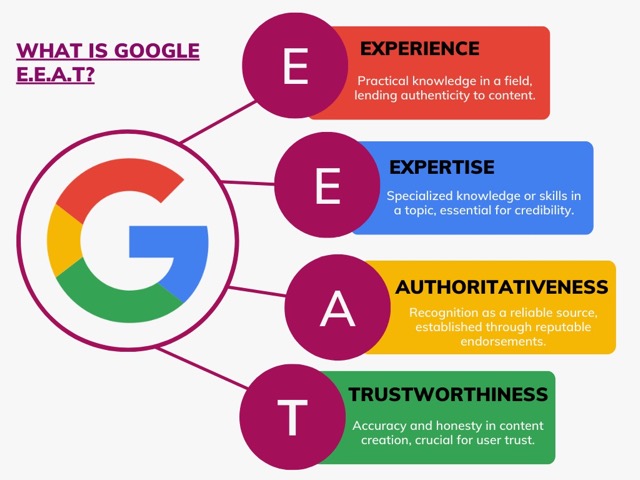
Your content must be regularly updated and qualify for EEAT quality. Source: Andava Digital Marketing Agency
Maximize AI Usage For Pillar Content
Using AI to develop pillar content is a smart, time-saving way to get inspired and organize your ideas.
If you’re stuck on what to write about or just starting your pillar content strategy, AI tools like ChatGPT, Perplexity, or Claude can help generate structured outlines and creative topic ideas quickly.
Here’s how you can utilize AI SEO when building your content pillars:
1. Start with a Clear Focus
Begin with a strong main topic in mind as this is the foundation of your pillar content. Then, ask your AI tool to brainstorm content pillar ideas based on that topic. The more specific your prompt, the better the results.
Example prompt: “My main topic is outdoor furniture. Suggest 3 to 8 content pillars. Each pillar should include a list of subtopics. Present the ideas in a table with two columns: ‘Pillars’ and ‘Topics’.”
This approach enables you to instantly generate core themes and subtopics that you can later develop into detailed blog posts, guides, or videos.
2. Use Prompt Modifiers for Better Variety
Don’t stop at one basic prompt. Ask the AI for different angles:
- “10 creative ideas for outdoor furniture content pillars”
- “10 surprising subtopics for outdoor furniture buyers”
- “Ideas for content pillars with a sustainability angle”
These modifier prompts give you more diverse results and help you discover fresh content opportunities within your niche.

Follow this formula to generate effective ChatGPT prompts. Source: Sarah Tamsin
3. Get a New Perspective
Try assigning the AI a specific role to fulfill. For instance:
- “Answer as if you were a first-time outdoor furniture buyer.”
- “Think like an Instagram furniture influencer and suggest content themes.”
This simple tweak helps the AI generate pillar content from a more customer-focused or trend-savvy lens, which is useful for content that actually connects with your audience.
Learn more: AI SEO Company: How To Choose & What Are The Top 5
4. Brainstorm Across All Channels
Your pillar content strategy doesn’t end with blogs. AI can also help you adapt your content for different platforms:
- Social media posts (Instagram reels, TikTok, Pinterest pins)
- Email newsletter themes
- Video or podcast outlines
- Ebooks and downloadable guides
Ask the AI to turn a content pillar, such as “Outdoor Furniture Materials,” into a series of Instagram post ideas, or convert “Choosing the Right Patio Set” into an email series.
5. Generate First Drafts for Pillar and Cluster Pages
Once you’ve outlined your content pillars and subtopics, ask the AI to draft long-form content. It won’t be perfect, but it can help you:
- See how ideas flow together
- Identify gaps or repetitive sections
- Speed up the outlining and writing process
You can then revise and humanize this draft, ensuring it aligns with your brand and offers genuine value to your audience.
Frequently Asked Questions
1. What is a pillar content?
Pillar content (or a content pillar) is a long, in-depth piece of content that covers a broad topic your audience cares about. It acts as the main hub for related content pieces, like blog posts or videos, that go deeper into specific subtopics. Pillar content helps organize your website, improve SEO, and show search engines you’re an expert in your field.
2. What are the 4 pillars of content?
The 4 common pillars of content marketing are:
- Educational – teaches or explains something valuable to your audience.
- Inspirational – motivates or connects emotionally.
- Entertaining – light, fun content that grabs attention.
- Promotional – highlights your products, services, or offers.
Balancing these types helps keep your content varied and engaging.
3. What is a pillar page example?
An example of a pillar page could be “The Ultimate Guide to Digital Marketing.” This one main page would cover the basics of digital marketing and link to detailed pages about SEO, email marketing, social media, PPC, and more. It’s like a central hub that connects all the smaller, related topics in one place.
4. What is the content pillar idea?
A content pillar idea is the main theme or core topic your content strategy is built around. It’s usually a broad subject your audience cares about and can be broken down into smaller subtopics. For example, if your niche is fitness, a pillar idea might be “Weight Loss,” with subtopics like workouts, meal plans, and fat-burning supplements.

Jeng Nguyen has nearly 10 years of experience ranging from project management, operations, business development, customer service, content creation, video production, photography, website development, social media marketing, email marketing, advertising, SEO and sales.
Well-known as an ace Digital Marketing expert throughout various industries in Vietnam, Australia and the USA - Jeng is known for the success rate that he achieves whilst finding solutions tailored best for each unique business.
Jeng's mission is to revolutionize customer experience, starting with the journey of Attraction - Interest - Desire – Action. Together with a multi-expertise team at ROI Digitally, Jeng aims to provide businesses unprecedented breakthroughs in Return-on Investment from their customers.