Are you struggling to figure out how to drive traffic to your website and differentiate among the vast sea of Google websites? You’re not alone. 61% of marketers share your challenge: driving traffic and leads. But fear not – there are strategies to elevate your site’s visibility and draw in users.
1. How to drive traffic to your website: Keyword Research and Optimization
By implementing good SEO techniques, you can research, target, and create content around relevant keywords to increase website visibility and attract more visitors.
While search volume is important, simply focusing on keywords with the highest number of searches isn’t always the best approach. The ideal keyword balances popularity with relevance to your product or service.
The minimum acceptable search volume will vary depending on your industry’s competitiveness. In highly saturated industries like cosmetics, you may need to target keywords with a lower search volume (think thousands, not millions) to achieve success. This is because ranking for ultra-competitive terms can be extremely difficult. Ultimately, your SEO strategy should consider both keyword difficulty and search volume to find the optimal balance for your specific goals.

Use Ahrefs’s many filters to identify and rank the top keywords quickly.
Utilize long-tail keywords, which are specific phrases with three or more words. These phrases attract a targeted audience and can lead to higher conversion rates.
Also, using more specific phrases like these might help you appear in the “People also ask” section on Google, especially if they’re in your page title or a sub-heading.
Various keyword research tools are available, with Ahrefs and SEMrush being among the most popular. These tools allow you to explore keyword ideas and review metrics like search volume and competition.
Once you’ve chosen your keywords, it’s time to optimize your website. Optimization involves both on-site and off-site SEO strategies.
Learn more: Measuring SEO Success: Metrics and Tools
2. Content Creation and Optimization
Your company must have a blog where you consistently share helpful, detailed content on your website. This is essential.
- Businesses that have blogs receive 97% more links to their websites.
- Companies with blogs attract 55% more website visitors compared to those without.
- People who keep SEO blogs are much more likely to make money from their marketing efforts, about 13 times more likely.
The better content you put on your website, the more people will want to come to it. However, if you don’t have a blog, using most of the ideas mentioned here (or in any similar article) will be difficult.
You need to know who you’ll create content that attracts exemplary visitors. You aim to make content that pulls in gre can produce content that naturally brings them to your site.
While news and hot topics might bring in some traffic for a short while, they’re not worth the trouble. Instead, focus on subjects that your audience will always find interesting. These timeless posts will get traffic and links over time, especially if you update them regularly.

Importance of evergreen content.
Furthermore, headlines play a crucial role in attracting readers. Effective blog headlines have been shown to increase traffic by 500%. Even the most informative blog post may go unnoticed without an engaging headline. Learn to write compelling headlines so readers will choose your post on search engine results pages (SERPs).
Lastly, design tools like Canva can be utilized to illustrate ideas, present data visually, and create branded charts. When other websites use your images, they’ll link to your site.
Additionally, Google now displays more images in regular search results. Thanks to it, you will have more opportunities to rank higher on Google Search and increase your result’s attractiveness (and therefore click-through rate).
3. On-Page SEO Optimization
This is the core of on-page SEO—it’s about tweaking your content so search engines can understand it and show it in related searches.
A lot of work is involved, but as you keep at it, it becomes more accessible—and you’ll attract more visitors to your site. To sum it up, here’s how to do on-page SEO:
- Research keywords and focus on one for each page.
- Write detailed and valuable content about that keyword.
- Use the keyword in the title, headings, images, meta description, URL, and beginning of the page.
- Reduce the size of the picture and add the term to the name and ALT text to make it better.
- Create an engaging title that emphasizes the keyword.
- Structure the content with headings, ensuring the keyword appears in at least two H2 headings.
- Write a meta description that highlights the benefits and includes the keyword.
- Include 1-3 links to reputable external sites and internal pages.
- Keep the URL concise and descriptive, and include the keyword.
- Ensure the page is mobile-friendly, loads quickly, and is appropriately indexed.
- Regularly update the content to keep it current and relevant.
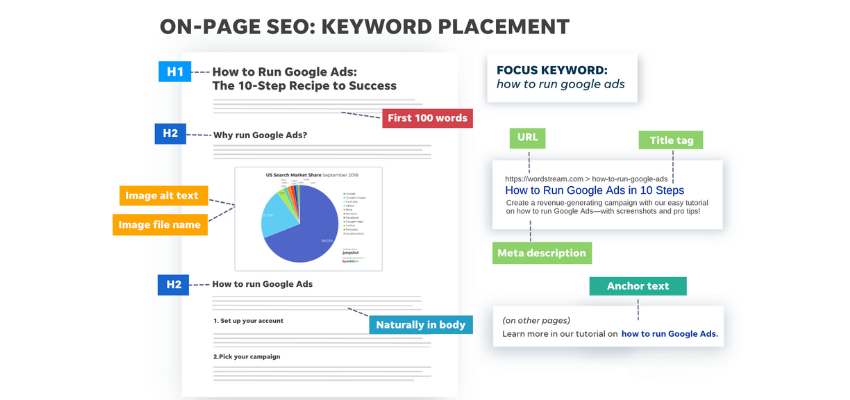
How to do on-page SEO.
4. Off-Page SEO Techniques
Consider off-page SEO as constructing your website’s image. Off-page SEO elements such as links from other sites, feedback, and endorsements assist search engines in recognizing your website as trustworthy. This recognition can enhance your website’s appearance in search results.
Concentrating on experience, expertise, authoritativeness, and trustworthiness (E-E-A-T) is a top strategy for gaining credibility with search engines. Google’s Quality Raters employ this framework to assess search outcomes and offer suggestions for enhancing future algorithm updates.
One of the main things that affect how well your website appears on Google is the number and quality of links that lead to it. If you have many links from trustworthy sites with high Domain Authority, your Domain also goes up. When your Domain Authority is higher, your website ranks better and gets more visitors. You also get traffic directly from the links leading to your site.

You can use SEMrush to analyze backlinks.
There are a few ways to get more links to your website. Here are some:
- Ask respected websites if you can write a guest post for them. In this post, you can include a link to your site.
- Use a tool to find links on other sites that don’t work, and suggest yours as a replacement.
- Make really good content that people naturally want to link to.
5. Local SEO Strategies
Why is it important to focus on local SEO? Let’s look at some numbers. Searches like ‘where to buy‘ or ‘near me‘ have increased dramatically.
Every month, about 97 billion searches are made specifically for local information.
Almost half, 46%, of all online searches include a location.
All these numbers tell us one thing: when people want to find products or services nearby, they rely on search engines the most.
If your website is set up to show up in local searches, you’ll be able to attract valuable customers who are ready to spend money.
And here’s the kicker: Your competitors who have optimized their websites for local searches get all the advantages, including getting more leads.
Set up a Google Business Profile (formerly Google My Business) to improve your visibility in local searches. This profile is crucial for getting noticed on Google and is a digital representation of your physical store. It’s essential to maintain a positive reputation there.

Set up a Google Business Profile to improve your visibility in local searches.
While Google is essential, don’t overlook other platforms like Yelp, Facebook, and TripAdvisor. These platforms reach a broad audience of potential customers actively searching for businesses like yours.
Here’s why it matters: Reviews on these platforms are a significant factor in consumer decisions, with about 90% of consumers looking at reviews before purchasing or going to a business.
This directly impacts your customer traffic, and positive reviews can boost your search ranking. Search engines consider these ratings when deciding which pages to rank, meaning a strong reputation across these platforms can give you a significant edge in search results.
Many platforms offer local advertising options to target nearby customers. Integrating local advertisements into your strategy is essential. Google Ads, presented by the most popular search engine, provides tools for local advertising.
Rather than starting with highly competitive social media platforms, consider targeting your audience on local platforms where they may be more active.
You can adjust your advertising campaigns by learning what resonates with your audience and studying the tactics used by your rivals. Use free resources such as Buzzsumo, Mention, and Ubersuggest to hone your strategy.
6. Technical SEO Optimization
Google’s “spiders” regularly explore countless websites to gather information for search results. Your site’s design can help or hinder these spiders in their work. Here’s what you can do to make things easier and gain an advantage when optimizing for technical SEO:
- Simplify your site structure: Ensure your website is easy to navigate. If visitors can find what they need quickly, so can Google. Keep clicks to a minimum, as too many clicks slow down Google’s crawling process. Organize your content logically, ensuring every page is easily accessible from the homepage. Using a silo website structure can help speed up Google’s exploration.
- Keep your site secure: Ensure your website has a secure certificate (https://) and choose a reliable web hosting service. Google prioritizes secure sites in its rankings, and frequent downtime can harm your ranking further.
- Optimize for speed: Your site should load quickly on all devices. Aim for good scores on Core Web Vitals metrics:
- Largest Contentful Paint: Aim for under 2.5 seconds.
- First Input Delay: Keep it under 100 milliseconds.
- Cumulative Layout Shift: Ensure content settles quickly after loading.
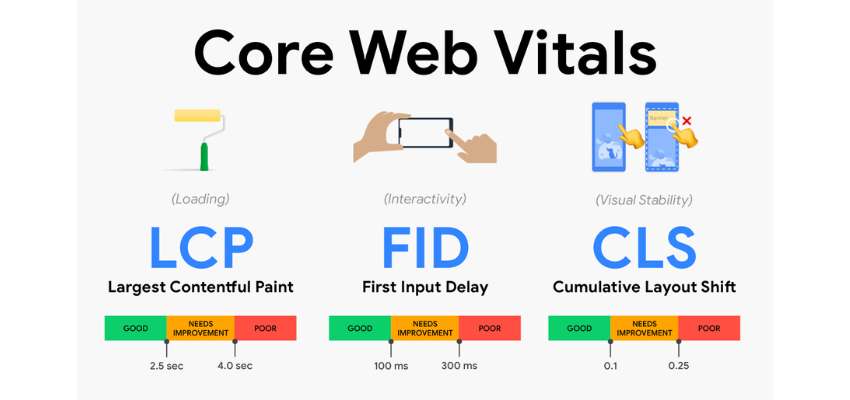
Aim for good scores on Core Web Vitals metrics.
Implementing these factors into your website design and maintenance can be straightforward and greatly benefit your site’s performance.
7. Mobile SEO Optimization
Customers’ use of mobile devices, such as phones and tablets, to purchase products and services is a major factor contributing to the expansion of e-commerce globally. Mobile e-commerce sales hit $2.2 trillion in 2023, accounting for 60% of global e-commerce sales, according to Statista’s Market Insights.
With the increasing prevalence of mobile device usage for internet browsing, Google also aims to ensure that websites are easily accessible, load quickly, and are user-friendly on both mobile and desktop platforms. That means if you don’t adapt your website to match what people are searching for, it might not appear in search results.
While there are many search engines out there, Google is the most crucial one for phone searches. About 95% of people use Google to search on their phones.
To determine what is and is not working for your website, you should track and analyze your phone traffic, sales, rankings, and user behavior. Here are some commonly used tools:
- Google’s Mobile-Friendly Test: This tool evaluates a website’s mobile-friendliness by analyzing factors such as mobile viewport configuration, content usability, and loading speed.
- PageSpeed Insights: Provided by Google, this tool measures a webpage’s performance on mobile and desktop devices and provides suggestions for improving loading speed and user experience.
- Mobile Usability Report in Google Search Console: This report highlights mobile usability issues detected on a website, such as text readability, tap target sizes, and viewport configuration, helping webmasters optimize for mobile users.
- SEMrush Mobile SEO Toolkit: SEMrush offers various tools to analyze mobile SEO, including Mobile Visibility, Mobile Keyword Rankings, and Mobile Traffic Insights. These tools help users track mobile performance and identify areas for improvement.
- Moz’s Mobile Site Audit: Moz’s tool examines website audit factors like mobile-friendliness, page speed, and other mobile SEO factors, providing actionable insights and recommendations to enhance mobile optimization.
- Mobile Friendly Test by Bing: Similar to Google’s Mobile-Friendly Test, this tool from Bing assesses the mobile-friendliness of a website and provides suggestions for improvement to enhance its performance on mobile devices.
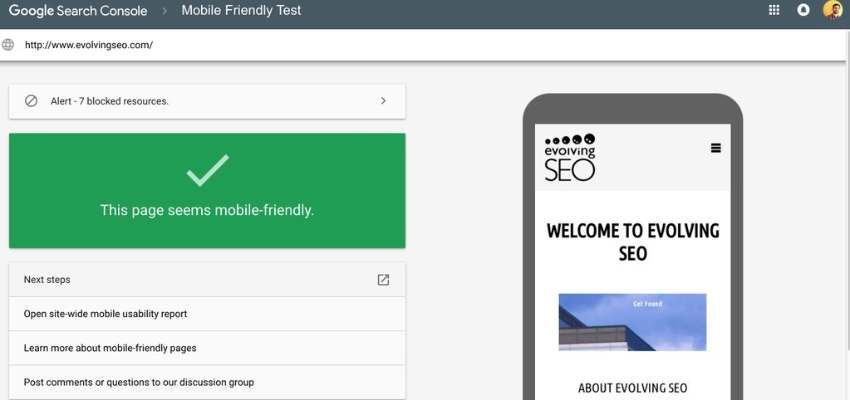
Use Google Search Console to examine your website on the phone.
When designing a website for mobile devices, several factors need to be considered to ensure optimal performance and user experience:
- Responsive Design: Ensure the website layout adapts seamlessly to various screen sizes and orientations.
- Page Loading Speed: Optimize images, minimize server response time, and leverage browser caching to enhance loading speed.
- Mobile-Friendly Navigation: Implement user-friendly menus, buttons, and navigation bars suitable for touch interaction.
- Content Prioritization: Display essential content prominently and minimize clutter to improve readability and user engagement.
- Touch-Friendly Elements: Use larger buttons and clickable areas to facilitate easy tapping and interaction on touchscreen devices.
- Optimized Forms: Simplify form fields and input methods to streamline user data entry and submission on mobile devices.
- Cross-Device Compatibility: Test the website across various mobile devices and platforms to ensure consistent performance and compatibility.
- Minimize Pop-ups: Avoid intrusive pop-ups or interstitials that may disrupt the user experience on mobile devices.
8. Community Building and Engagement
Joining online groups and websites related to your business and community doesn’t cost anything; it helps bring more visitors to your site. Leave comments on blogs and social media, answer questions, and join conversations about your industry.
The more you interact with your community, the more people will visit your profile. People like to share their opinions and discuss topics they care about, so creating a community on your website is an excellent way to start discussions and increase traffic.
Use tools like Facebook comments or Disqus for commenting, or set up a forum where visitors can ask questions. Make sure to moderate your community to maintain a respectful environment.

Use tools like Facebook comments for commenting.
No matter your industry, some conventions and conferences will likely relate to your business. Attending these events is helpful, and speaking at them is even better. Even a decent speaking opportunity can help you become known as a leader in your field and bring more attention to your website.
9. Influencer Marketing
One more thing you should consider is how many people your business currently reaches. If you’re hitting a limit, it might be a good idea to ask for some extra help. That’s where influencers come in.
In the context of influencer marketing, how to increase organic traffic: They already have many followers who regularly watch and engage with their stuff. Getting your brand mentioned on their channel(s) could make a big difference and bring more people to your website.
When considering influencer marketing, you might want to aim for the top influencers, especially on platforms like TikTok. But big influencers usually charge a lot. It’s better to work with a variety of smaller influencers instead.

Let influencers speak for themselves.
Engagement is essential, too. Smaller influencers often have more engaged followers because they’re more authentic. They interact more with their followers, and their followers engage more with their content. So, consider who your audience relates to best when looking for influencers.
Let influencers speak for themselves. They should be free to talk about your company in their way, making their content more genuine. If it resonates with their viewers, they might visit your website and become customers.
You can also have influencers review your products. They can review what you already have, which could attract more customers. Or, they can review your products before they’re even out, building excitement and possibly leading to pre-orders and more buzz about your product.
10. Email Marketing Tactics
A newsletter doesn’t need to be complicated. It’s great for people who use their email inbox as a reading list and helps share posts on topics your audience might not think to search for.
For example, one post about emotional writing gets 1,000 visits from search engines each month, but it’s a big hit with our email subscribers, gaining over 4,000 views in just a few days.
However, be careful not to send too many emails or include too many links in one email. Also, think carefully about your email subject lines because they significantly affect whether or not someone opens your email. If your emails aren’t opened, they won’t bring traffic to your site!
Personalization in emails is an effective method with a good click rate. In a 2016 survey, personalized emails had an 18.8% click rate compared to 13.1% for non-personalized ones. That’s why more marketers are using personalization in their email campaigns.
Research shows that emails with the highest click rates (8.8%) offered discounts on products customers had been looking at. Sending birthday or special occasion greetings can also show customers you value them.
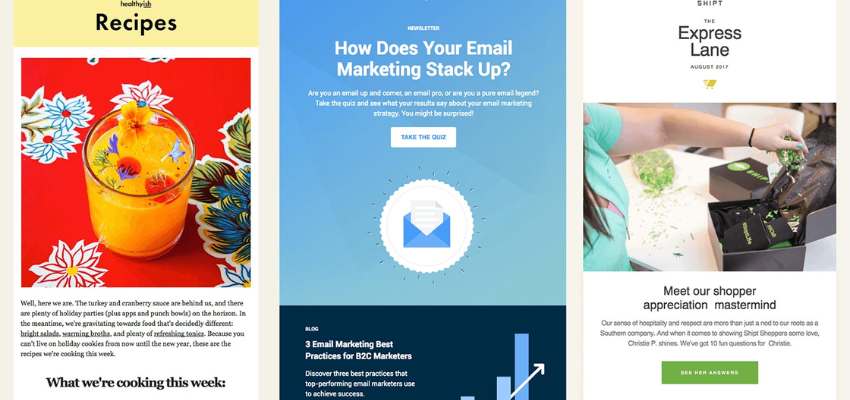
Personalization in emails is an effective method with a good click rate.
They say, “A picture is worth a thousand words,” and it’s true! But how many words do you think a video is worth? Everyone enjoys a good narrative; a video is arguably the finest way to convey one. Make your product story interesting, informative, and memorable.
Just mentioning “video” in the subject line can increase open rates by 6%. Video email marketing should be part of your content strategy because people don’t have time to read long texts.
However, your video should be short, load quickly, and work well on mobile devices. You can include demos, introduce new products, show creative ways to use your product, or talk about your company’s beginnings.
11. Social Media Marketing Strategies
Although Google remains the top source of online traffic, it’s also crucial to nurture your presence on social media platforms. According to data from HubSpot, about 16% of online traffic still originates from social media.
Your audience is scattered across various online platforms, including Twitter, LinkedIn, and Facebook. These platforms serve as valuable avenues to connect with a ready-made audience interested in your message and mission. ‘
Tailor your content promotion to suit each platform; for instance, Twitter suits concise, enticing links, while Google Business posts aid local search visibility.
For B2C companies, platforms like Pinterest and Instagram can yield significant traction due to their visual nature.
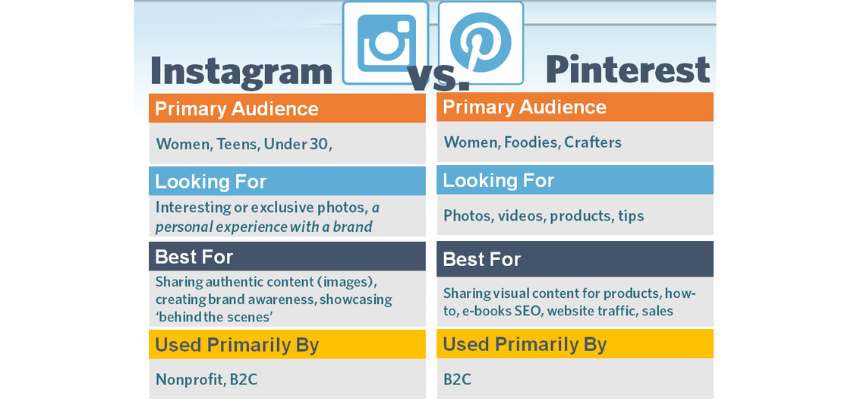
Difference between Instagram and Pinterest.
Sharing your content frequently is how to drive more traffic to your website and increase the chances of earning backlinks. Establish a content calendar to simplify your social media management.
Incorporate relevant hashtags into your posts to boost their reach, but keep them specific to attract the right audience.
When you include social sharing icons on your website, readers will easily share your material. Lastly, to increase click-through rates, include interesting graphics in your postings.
12. Paid Advertising Methods
Paid advertising, often called PPC, is widely used by small businesses, with about 65% already employing it. These businesses spend between $9000 and $10,000 monthly on paid ads.
When done correctly, PPC campaigns can yield a good return on investment (ROI), sometimes up to 200%. It’s wise to invest in PPC but even wiser to select the right paid traffic channels.
This involves not only choosing the appropriate channels but also determining the amount of budget to allocate and the timing of investment.
The primary sources of paid traffic include:
- Display ads or banner ads
- Paid search platforms like Google Ads or Bing Ads
- Advertisements on social networking sites, including YouTube, Facebook, LinkedIn, Twitter, and TikTok
- Native ads, which are sponsored content promoted by networks like Outbrain
- Influencer marketing, where influencers promote products or brands to their followers
- Affiliate marketing, where third-party promoters drive clicks to a website.

Paid search platforms like Google Ads or Bing Ads.
Video marketing is viral, with YouTube being the second most visited website globally. YouTube users spend significant time on the platform, making it an excellent opportunity for businesses to capture their attention through short ads, especially appealing to younger audiences.
Google searches see over 9 billion daily, and more than 50% of consumers research products through search before making a purchase. Advertising on Google search, especially at the top of the first page of search results, is essential for people to notice your stuff, click on it, and buy things.
Google offers various targeting options, including Dynamic Search Ads, to reach potential customers effectively.
LinkedIn Ads are essential for B2B businesses. They offer precise targeting options to reach senior-level influencers and can yield impressive returns for B2B marketers despite being relatively costly.
TikTok has emerged as a powerful platform, especially for reaching younger audiences. With its engaging content format, TikTok Ads offer an attractive option for companies targeting Gen Z consumers.
13. Media Coverage and Public Relations
Although PR and SEO are different, combining them can give you excellent results. These marketing methods aim to achieve similar goals, such as getting more customers, sharing content on social media, showing social approval, making people aware of your brand, keeping your brand consistent, and gaining trust.
PR strategies can help you get links back to your website and increase the number of people visiting your site. PR is about connecting with people who can help you get mentioned in the media and get backlinks. This includes getting links to your website when your business is mentioned, being invited to write for other websites in your field, and so on.
But remember, you have to ask for these backlinks. Just because you create great content doesn’t mean people will automatically link to it. You must contact influencers, marketers, and respected websites in your field and ask them for backlinks.

PR strategies can help you get links back to your website.
For example, if you’ve written a blog post about a place you’ve visited on your lifestyle blog, which other travel bloggers might find interesting, you should tell them about it and ask them to link to it if they think their audience would like it.
If you catch people at the right time, your content might be very relevant to them, and they might link to it simply because you told them about it. A lot has changed in digital PR in recent years, but guest posting is still one of the best ways for PR professionals to get valuable backlinks.
The key to success with this tactic is to write for influential websites in your field (especially those with good SEO) and include your backlinks. You can also write for smaller blogs with targeted audiences.
Here are some things to remember:
- Choose websites for guest posting based on their relevance and credibility.
- Don’t publish the same content on multiple websites, as this will be seen as spam and could get you in trouble with Google.
- Make sure the site you’re writing for agrees to include a backlink.
- A strong brand with many mentions on other websites can improve your SEO. PR is essential for SEO because it can help you get links and social approval to boost your marketing efforts.
If you are mentioned on major websites in your field, in newspapers, industry magazines, or popular regional websites, it can really improve your website’s SEO.
Google’s search results have been favoring big brands for competitive search terms. That’s why getting mentioned on other websites and making your website more like a brand is crucial to competing better in your field.
Conclusion
If you’re wondering how to drive traffic to your website, consider leveraging SEO techniques, engaging in content marketing, or exploring social media advertising. Rather than trying everything simultaneously, start by selecting one effective tactic and a suitable platform.
Remember, a successful digital marketing plan combines short-term and long-term approaches. Once you feel confident with one method, return here to choose your next traffic-boosting strategy!
Don’t forget to visit ROIDigitally’s website for valuable insights on SEO and enhance your knowledge further!
Frequent Ask Question
How Do I Get More Traffic To My Website?
Focus on several strategies to increase traffic to your website. First, create high-quality, engaging content that addresses the needs and interests of your target audience. Then, utilize social media platforms to promote your content and engage with your audience.
Spend money on search engine optimization (SEO) to increase your website’s visibility on search engine results pages. Other strategies to increase website traffic include influencer partnerships, guest posting, and focused internet advertising campaigns.
How Do You Pass Traffic To A Website?
There are several strategies for sending traffic to a website. One efficient strategy is referral traffic, obtained by having other websites link to your material. This can be achieved by collaborations, guest posting, or producing easily shared material that links naturally to it.
Social media promotion is another avenue; by sharing your website’s content across different social platforms, you can direct traffic back to your site. Additionally, paid advertising campaigns on search engines or social media platforms can drive targeted website traffic.
How Do I Drive Traffic To My Website Through SEO?
Making your website better for search engines (SEO) brings in natural visitors. Look for words related to your content and who visits your site. Put these words in essential places on your site, like titles and descriptions.
Also, ensure your site works well and loads fast, especially on mobile devices. Keep adding new, good stuff for your visitors to read and share.
How Do I Direct Traffic To My Website For Free?
Using a variety of free techniques, you can increase website traffic without spending money. Prioritize producing high-quality content that draws in and motivates members of your target audience to visit your website.
Next, post your material on social media and interact with your audience using these sites.
Participate in online communities and forums related to your line of work. Here, you can share your expertise and, if suitable, include backlinks to your website. By optimizing your website for search engines, you can boost its organic visibility and attract free traffic by following SEO best practices.

Jeng Nguyen has nearly 10 years of experience ranging from project management, operations, business development, customer service, content creation, video production, photography, website development, social media marketing, email marketing, advertising, SEO and sales.
Well-known as an ace Digital Marketing expert throughout various industries in Vietnam, Australia and the USA - Jeng is known for the success rate that he achieves whilst finding solutions tailored best for each unique business.
Jeng's mission is to revolutionize customer experience, starting with the journey of Attraction - Interest - Desire – Action. Together with a multi-expertise team at ROI Digitally, Jeng aims to provide businesses unprecedented breakthroughs in Return-on Investment from their customers.